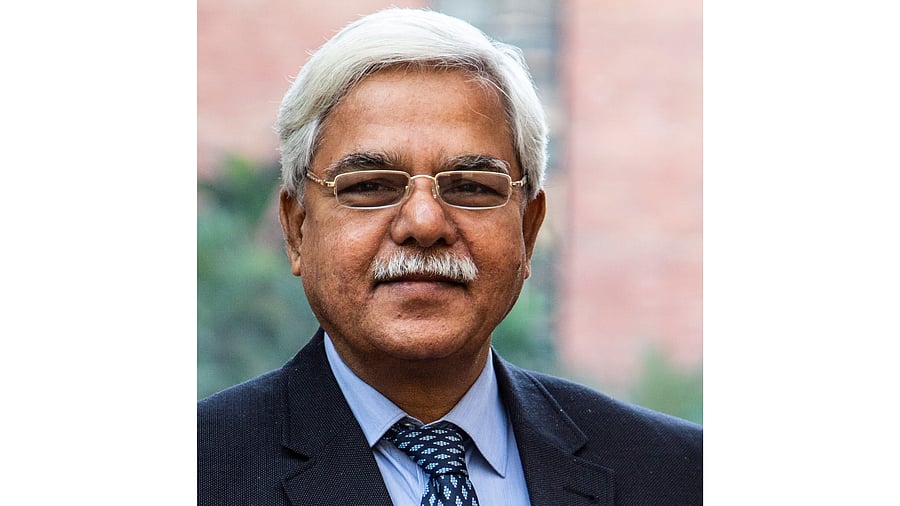
R R Rashmi Photo-TERI.
COP30 marks 10 years of implementation of the Paris Agreement. It is also the year when all signatories to the Paris Agreement are mandated to revise their current Nationally Determined Contributions (NDCs) and submit fresh ones. The last time the NDCs were revised or updated was in 2021. The revision must consider the results of the first global stock taking that took place in 2023 in Dubai. Although India is performing well in achieving its current targets, the world is not on track to stabilise the climate below 1.5°C above the pre-industrial level because of very large emissions gap. New NDCs have to reflect the ambition of countries in pursuance of the global goal.
In addition, there are two major deliverables expected at COP30 in Belém. The first is the Global Goal on Adaptation (GGA). The indicator framework for this goal is currently under preparation, and it is hoped that it would be finalized at Belém. This framework will establish indicators and outcomes for tracking adaptation progress. However, one crucial issue is determining the extent to which the means of implementation such as finance, technology, and capacity building will be integrated into this set of indicators. If these indicators are clearly defined, there is a likelihood of greater financial flows for adaptation activities linked to measurable outcomes. India is already spending about 2.5–3.5% of GDP on various development programmes that yield adaptation co-benefits. What is needed is an assurance of higher financial flows from international and global sources. A well-defined indicator framework at COP30 could help facilitate this by enabling better access to adaptation finance.
The second key deliverable is the roadmap for mobilizing $1.3 trillion under the New Collective Quantified Goal (NCQG) for climate finance. This is additional to the $300 billion goal set for developed countries. Achieving the $1.3 trillion goal will require contributions not only from governments but also multilateral development banks, private investors, equity funds, financial institutions, sovereign wealth funds, and global pension funds that manage large pools of capital. The roadmap must clearly outline the contributions expected from each stakeholder group, the potential financial instruments, and the fiscal, financial, or other policy interventions required to support this mobilization.
The challenge in mobilizing $1.3 trillion lies not only in government commitments but also in ensuring that international capital from financial markets becomes accessible at lower costs. Suggestions including those made by the UNFCCC’s Standing Committee on Finance include sources or instruments such as sovereign wealth funds, debt-swaps, blended finance, and other arrangements to help de-risk green investments. These solutions are not universally acceptable. Insistence on public funding and reform of the multilateral banking system are likely to dominate the discussions.
At Belém, the issue of unilateral measures aimed at enforcing pre-determined carbon prices and uniform policies across jurisdictions may also receive attention. Such measures are divisive because the levels of industrial development, decarbonization strategies, and goals vary significantly across countries. For instance, India’s NDC focuses on reducing emissions intensity, not absolute emissions. In contrast, the European Union, which is attempting to apply uniform carbon standards on its trading partners, is obliged under the Paris Agreement to reduce emission absolutely. The issue requires careful handling through bilateral discussions and mutual recognition of decarbonisation efforts at sectoral and national level based on equity, rather than product level. A carve out for Micro, Small, and Medium Enterprises (MSMEs) may help the process.
No doubt COP30 is beginning on a challenging note in the absence of the United States which may influence private sector engagement in clean energy investments and the process of fossil fuel phasedown. However, the commitment of the international community to the Paris goals is steadfast and positive. Recent geopolitical and economic shifts may well have strengthened the process of development and deployment of clean energy technologies in non-western jurisdictions.
(The writer is a Distinguished Fellow at TERI and a former climate negotiator)