
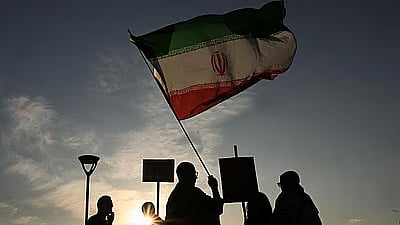
Representational image for protest in Iran.
Credit: Reuters Photo
Internet access and telephone lines in Iran were cut out Thursday as protesters across multiple cities in the country demanded the expulsion of the Islamic government, chanting slogans opposing the rule.
Large crowds across the capital city Tehran, and various other places such as Bushehr, Isfahan, Mashhad, and Shiraz raised voices against the Islamic clerics' authoritarian rule.
Nationwide internet blackout
The internet shutdown came a day after the chiefs of Iran’s judiciary and its security services said they would take serious measures against anyone involved in protesting, reported The New York Times.
BBC reported that various sites were found to be unavailable, and monitoring networks identified a "nationwide blackout". The government has enforced such shutdowns before, but they have not deterred the protesters.
What began the wave of protests?
The recent wave of protests was triggered by the dire state of the country's economy and diminishing living standards. Demonstrations began on December 28, 2025, with shopkeepers and merchants carrying out a strike due to Iranian currency rial falling to a record low against the US dollar.
Sky News reported that since the United Nations re-imposing sanctions from September 2025 on Iran, which was already battling the sanctions imposed by US President Donald Trump in 2018, the problems intensified.
Shopkeepers have continued to halt their businesses, as the demonstrations, which started from the economic standpoint, turned political. This wave of demonstrations is seen to be significant as cities that had not participated in the protests earlier, including Tehran, saw people crowd on streets to demand answers from the government.
Reza Pahlavi, the exiled son of the last Shah of Iran, in a video post on X on Thursday, gave a call for more protests.
"Millions of Iranians demanded their freedom tonight. In response, the regime in Iran has cut all lines of communication. It has shut down the Internet. It has cut landlines. It may even attempt to jam satellite signals," his post read.
He further thanked Trump for "reiterating his promise to hold the regime to account" and called European leaders to do the same.
US involvement
As death toll during the demonstrations continue to rise, Trump, on January 4, warned Iran that it would get "hit very hard" by the United States if more protesters die during demonstrations, Reuters reported.
"We're watching it very closely. If they start killing people like they have in the past, I think they're going to get hit very hard by the United States," the US President told reporters aboard Air Force One.
Responding to the warning, Iran's Supreme Leader Ayatollah Ali Khamenei promised not to yield, saying the Islamic Republic "will not yield to the enemy" and the rioters should be "put in their place".