
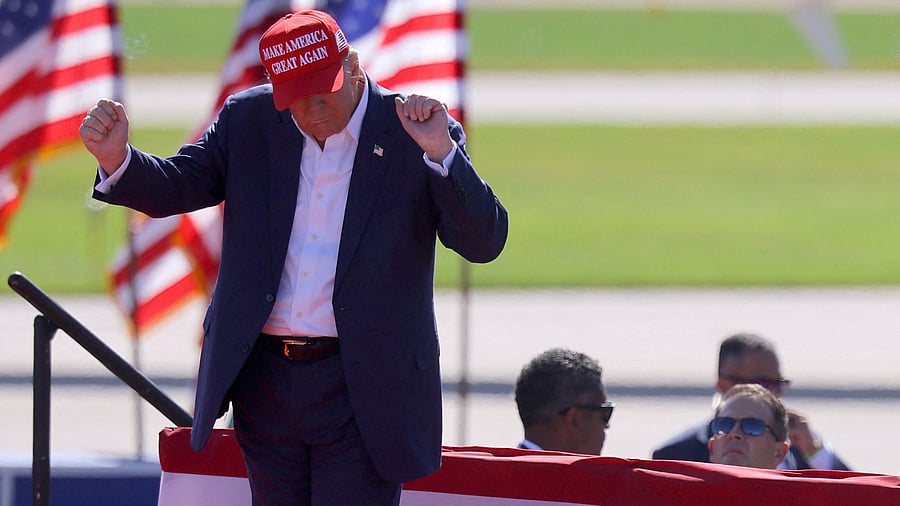
US President Donald Trump
Credit: Reuters Photo
20 US states filed a lawsuit on Friday that aims to block President Donald Trump's $100,000 fee on new H-1B visas for highly skilled foreign workers, arguing that this policy is 'unlawful' and puts a dent in the essential public services.
The 79-year-old president in September sharply increased the cost for employers seeking to hire high-skilled foreign workers under the H-1B visa programme. At the moment, employers typically pay between $2,000 and $5,000 in fees.
The H-1B visas programme is widely used by hospitals, universities and public schools.
California Attorney General Rob Bonta's office said that Trump lacks the power to impose the fee as it violates federal law, which allows immigration authorities to collect only fees necessary to cover the cost of administering visa programs.
“As the world's fourth largest economy, California knows that when skilled talent from around the world joins our workforce, it drives our state forward,” Bonta said.
The tech industry in United States is particularly reliant on workers who receive the visas and so is the healthcare.
In New York alone, more than a third of health care workers are immigrants, while public universities and hospitals rely heavily on H-1B professionals, according to the lawsuit.
Bonta, a Democrat, said the exorbitant fees would create financial burdens for providers of services such as education and healthcare. This in turn would exacerbate shortages in vital industries and propel them to cut services.
"The Trump administration thinks it can raise costs on a whim, but the law says otherwise. We are going to court to defend California’s residents and their access to the world-class universities, schools, and hospitals that make Californians proud to call this state home,” Bonta said.
Along with California, New York, Massachusetts, Illinois, New Jersey and Washington are also joining the lawsuit among others.
Those backing Trump's new H-1B policy claim that foreign workers replace American workers, since they work for less remuneration.
However, those against the new policy claim that workers on H-1B visas are a critical means to address a shortage of qualified American workers.
The US Chamber of Commerce, have filed separate lawsuits challenging the fee. A judge in Washington, DC, is set to hold a hearing in the Chamber's lawsuit next week.
Trump's order bars new H-1B recipients from entering the United States unless the employer sponsoring their visa has made the $100,000 payment. The administration has said the order does not apply to existing H-1B holders or those who applied before September 21.