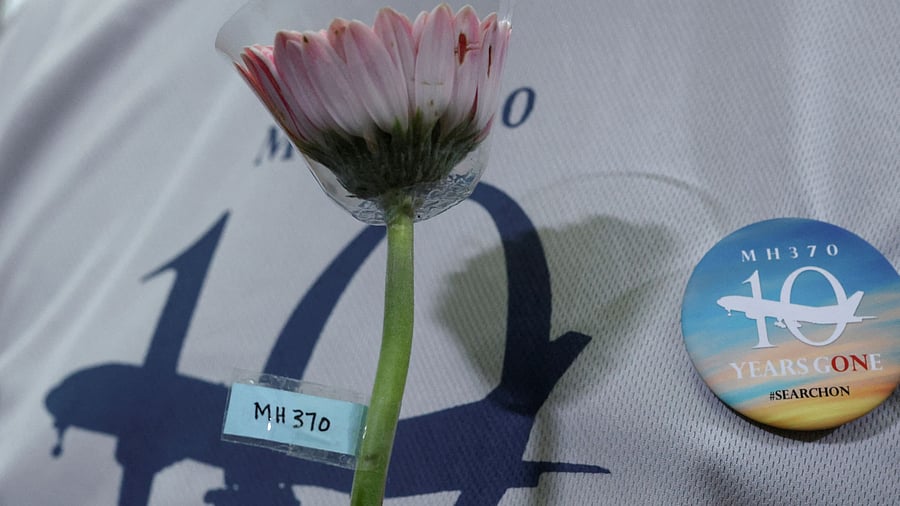
A family member of the missing Malaysia Airlines flight MH370 holds a flower during a remembrance event
Credit: Reuters Photo
By Karishma Vaswani
It’s one of the world’s great unresolved aviation mysteries. On March 8, 2014, Malaysia Airlines Flight MH370 lost contact with air traffic control less than an hour after takeoff. It was never seen again.
More than 11 years later, the search for the aircraft will begin again this month. Prime Minister Anwar Ibrahim has an opportunity to correct what previous administrations bungled. His government cannot guarantee the plane will be found, but it can offer what his predecessors didn’t: transparency.
Marine exploration company Ocean Infinity will resume looking on Dec 30, after another search was halted earlier this year because of seasonal weather issues. This attempt will give the firm 55 days to scour a 15,000-square-kilometer (5,791 square-miles) area in the southern Indian Ocean, assessed to have the highest probability of locating the aircraft. The mission will be conducted on a “no find, no fee” basis, with Transport Minister Anthony Loke previously saying the company would be paid $70 million if something is found.
But commitment will matter only if it’s matched by competence. Malaysia has made big promises before. The Najib Razak government’s handling of MH370 in the early months was widely criticised for confusion and opacity. An official 2018 safety investigation report concluded the plane was probably steered off course deliberately and flown to the southern Indian Ocean, but stopped short of apportioning blame.
That’s left the families of the 239 people on board with years of grief and unanswered questions. A majority of the passengers on the flight from Kuala Lumpur to Beijing were Chinese. Others included Malaysians, Indonesians and Australians, as well as Indian, American, Dutch and French nationals.
Anwar is inheriting this legacy, and at a difficult time for his administration — a former senior aide has been detained and charged over alleged bribes linked to mining licenses. It’s an uncomfortable backdrop for a leader who came to power on an anti-graft platform, and his credibility could be further damaged if this search is mismanaged.
There are several things Malaysia must get right this time round, starting with communicating clearly — in contrast to the way the government managed the initial MH370 investigations. The haphazard nature of announcements this year, from contract talks to weather delays, risks opening old wounds. Silence from authorities, even for a few weeks, brings back memories of 2014, which was marked by confusion around official statements. Families deserve timely updates, whether wreckage is found or not.
There are reasons to be cautiously optimistic. Ocean Infinity says it has improved its technology since 2018, working with a far more mature suite of ocean-mapping tools. These include largely uncrewed surface vessels coordinating autonomous underwater vehicles, which will hover just above the seabed, enabling it to map terrain down to a depth of nearly 6,000 meters (19,685 feet) and search wider areas with sharper images.
All of this is reassuring, but neither Malaysia nor the firm should allow further delays. A loss of momentum would undermine confidence, feeding conspiracy theories that Kuala Lumpur will once again drag its feet over the investigation.
Malaysia Airlines has faced an uphill climb to restore its reputation since the disappearance of MH370, compounded by the downing of MH17 over Ukraine that same year. A UN aviation council ruled Russia was responsible for the tragedy that killed all 298 passengers and crew. Since then, the carrier has been privatised and is now owned by the nation’s sovereign wealth fund Khazanah Nasional Bhd.
Anwar’s administration should commit to releasing search data, analysis, and updates in real time. This would strengthen confidence and potentially contribute to global aviation safety. Experts learn from each other’s findings, and giving investigators access to this data would allow them to improve their models for deep-sea crash dynamics.
For the families, it could go some way to resolving their grief. A well-managed search could go a long way toward showing the world that Malaysia can keep the promises it has made.