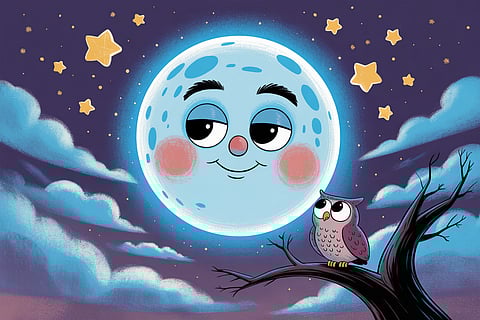

When someone says an event happens “once in a blue moon,” they mean it’s rare — very rare. But the phrase didn’t appear out of nowhere. It began with a real sky phenomenon that looks magical, but hardly ever happens.
A “blue moon” originally referred to the third full moon in a season that accidentally had four. Most seasons have only three, so an extra one was unusual and needed a special name. Over time, another meaning became popular: the second full moon in a single month, which happens roughly every two or three years. Despite the name, the moon doesn’t actually turn blue — except on extremely rare occasions when volcanic ash or wildfire smoke scatters light in strange ways.
By the 1800s, English speakers had embraced “blue moon” as a symbol of rarity. Newspapers and books began using the phrase to describe events that were unlikely, surprising, or almost never seen. Slowly, the idiom settled into everyday language: something that happens “once in a blue moon” is not impossible — just wonderfully uncommon.
So the next time a friend finishes homework early, or your class gets a free period, you know what to say. It doesn’t happen often. It happens once in a blue moon.