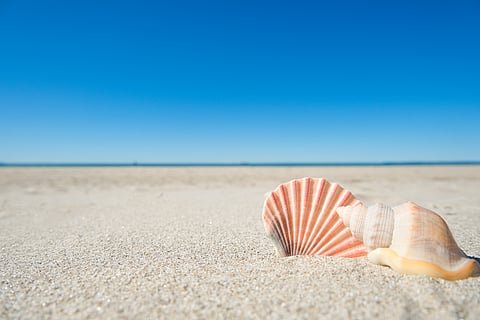

Along certain beaches of the Maldives, especially after powerful storms or monsoon surges, the sand suddenly looks sprinkled with soft pink shells. These pastel shades come from microscopic marine organisms called foraminifera—tiny creatures with calcium carbonate shells. Some species contain natural red pigments made of iron-rich minerals, giving their shells a pink tint.
Under normal conditions, these fragments remain buried under layers of white sand. But when storms churn the seabed, deeper sediments containing the pink shells are lifted and carried toward the shore. Because these grains are lighter than regular sand, waves push them farther up the beach, creating scattered pink patches.
The colour looks pastel, not bright, because the grains are extremely small—often less than a millimetre. When sunlight hits them, the reddish tones blend softly with the surrounding white sand. The effect lasts only a few days. Tides eventually redistribute the grains, mixing them back into the seabed until the next storm exposes them again.
The appearance of pink shells depends on which species of foraminifera live in the nearby lagoon and how intensely the storm stirred the seafloor. This is why the phenomenon is irregular—some years the beaches remain white, while in others, they blush with a gentle pastel pink.