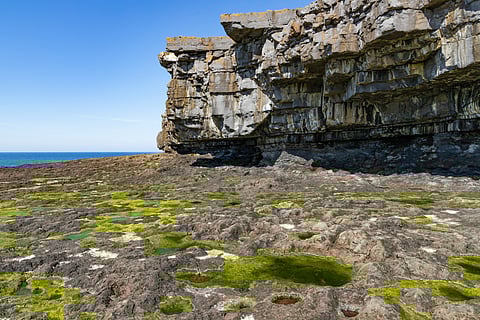

Along certain coastal cliffs in Ireland, visitors notice an unusual acoustic effect: voices seem to vanish into the air instead of echoing back. It feels as though the cliff “swallows” sound. This strange quietness is caused by the structure and shape of the rock itself.
Many Irish sea cliffs are made of porous limestone, a rock filled with tiny holes and channels. When sound waves strike the surface, some of the energy enters these pores instead of bouncing back. The rock acts like a natural sound absorber, similar to acoustic foam, reducing echoes dramatically.
The shape of the cliffs also plays a role. Some have curved or irregular surfaces that scatter sound waves in multiple directions. Instead of returning a clear echo to the listener, the waves bounce away at different angles and fade quickly. Sharp turns in the cliff face further disrupt sound paths, preventing any strong reflection.
Moisture from sea spray enhances the effect. When the rock absorbs water, the pores fill and soften the surface, making it even more effective at muffling sound. Wind adds another layer by carrying away the remaining sound waves before they return.
This combination—porous rock, curved geometry, moisture, and wind—creates coastal spots where voices seem to dissolve into silence.