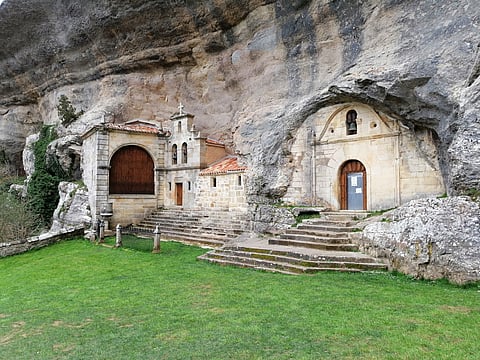

In northern Spain’s Cantabrian Mountains, winter snow often blankets the landscape. Yet inside nearby karst caves, temperatures remain surprisingly mild and steady. While icy winds sweep the slopes outside, these underground chambers feel calm and cool rather than cold. This contrast happens because caves are naturally insulated from rapid weather changes.
Karst caves form in limestone, a rock that dissolves slowly in water and develops deep chambers and tunnels. Once these caves extend far enough underground, they become separated from daily and seasonal temperature swings. Instead of responding to short-term weather, cave temperatures reflect the average annual temperature of the region.
In the Cantabrian region, this average sits well above freezing. Thick rock layers surrounding the caves act as thermal buffers, absorbing heat during warmer months and releasing it slowly during winter. Snow and cold air at the surface cannot penetrate deep enough to alter the cave’s internal climate.
Air movement also plays a role. Many caves have narrow entrances and winding passages that limit how much cold air can enter at once. Even when cold air flows in, it warms quickly as it mixes with the stable cave air and surrounding rock. This keeps the cave temperature relatively constant throughout the year.
Water inside the cave adds to the effect. Underground streams and moisture store heat efficiently and help regulate temperature. As a result, the cave environment changes very little, even when extreme weather occurs outside.
This stable warmth is why caves have long been used as shelters by animals and early humans. In the Cantabrian Mountains, caves quietly maintain their own climate—unaffected by snowstorms just metres above.