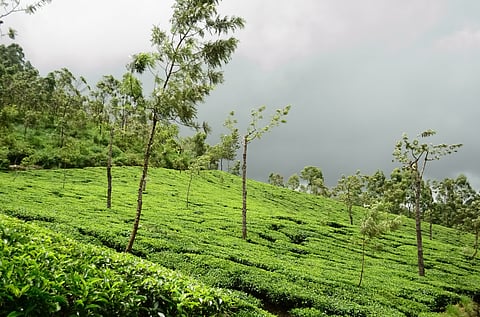

Early in the morning, before the sun becomes sharp, rows of green bushes stretch across rolling hills. Mist hangs low, clinging to leaves that glisten with dew. Quiet footsteps move between the plants as skilled hands reach out, pluck, and move on. This daily rhythm plays out across large parts of India, where tea plantations shape landscapes, livelihoods and history.
Tea did not always belong to India. Although the tea plant grew wild in the northeast, tea drinking became widespread only in the nineteenth century. The discovery of native tea plants in Assam changed everything. It proved that tea could be grown locally, and soon vast plantations replaced forests in certain regions. What followed was not just the growth of a crop, but the creation of an entire system built around cultivation, processing and trade.
Today, India is one of the world’s largest producers of tea, and its plantations are spread across very different landscapes. In Assam, tea gardens lie on low, flat plains alongside the Brahmaputra River. The climate here is hot, humid and rainy, ideal for growing strong, bold teas. Assam tea is known for its deep colour and malty flavour, and much of it ends up in everyday breakfast blends.
Far to the north, the scene changes completely. In Darjeeling, tea grows on steep mountain slopes. Gardens cling to hillsides, sometimes at heights of over 2,000 metres. The cooler climate, thinner air and slower growth produce teas that are lighter in colour and more complex in taste. Darjeeling tea is often called the “champagne of teas” because of its delicate aroma, though this name reflects reputation rather than sweetness.
In southern India, tea plantations spread across the rolling hills of the Nilgiris, where the name itself means “blue mountains”. Here, tea is grown at varying elevations, creating a wide range of flavours. Nilgiri teas are known for their brightness and smoothness, and they often appear in iced teas and flavoured blends.
Despite these regional differences, the basic work of a tea plantation follows the same pattern. Tea bushes are kept low so that leaves are easy to reach. Pluckers usually pick only the top two leaves and a bud, as these produce the best quality tea. This task requires speed, accuracy and experience. Plucking too much or too little can affect the plant and the final taste.
Once plucked, leaves are rushed to factories nearby. Timing matters because fresh leaves begin to change quickly. Inside the factory, the leaves are withered, rolled, oxidised and dried. Each step affects flavour, colour and aroma. Small changes in temperature or time can produce noticeably different results, which is why tea-making is often described as both science and craft.

Tea plantations are also living communities. Many workers live on or near the estates, and generations of families have been connected to the same gardens. Over time, plantations developed schools, clinics and housing, creating self-contained settlements. While conditions have varied greatly across regions and eras, tea plantations remain major employers in rural India.
The landscape itself has been shaped by tea. Hills once covered with forest were terraced to make space for bushes. Drainage channels were carved to manage monsoon rains. Over decades, the neat geometry of tea rows became part of the identity of these regions. Today, when people picture Assam or Darjeeling, they often imagine endless green slopes first.
Tea plantations also face challenges. Climate change is affecting rainfall patterns and temperatures. In some regions, heavier rains damage roots, while in others, dry spells stress the plants. Pests and diseases are becoming harder to control. Plantation managers now experiment with new techniques, such as shade trees and soil management, to protect crops.
At the same time, global demand for tea continues to change. Some consumers look for mass-produced blends, while others seek single-estate or speciality teas. This has pushed plantations to focus on quality, traceability and sustainability. Certifications and geographical labels now play a role in how Indian tea is sold to the world.
Tea’s journey does not end in the plantation. From here, it travels through auctions, packaging centres and shipping routes, finally reaching cups across the globe. Yet everything begins with those early morning plucks, repeated day after day, season after season.