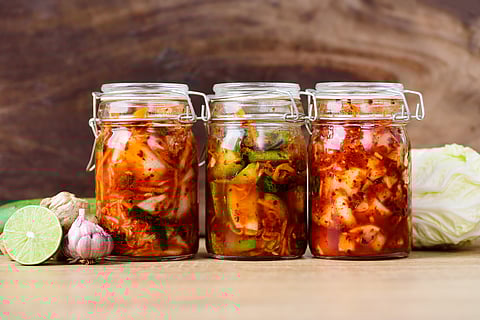

Fermentation and spoilage both involve microbes, but their outcomes are completely different. Fermentation is a controlled, beneficial process that makes food safer, tastier, and often more nutritious. Spoilage, on the other hand, is uncontrolled and signals that food is no longer safe to eat.
Fermentation happens when good microorganisms, such as friendly bacteria or yeast, grow under the right conditions. They feed on sugars in food and convert them into acids, gases, or alcohol. This process preserves food and creates new flavours. Everyday examples include curd from milk, idli and dosa batter, pickles, cheese, and bread. Fermentation can also improve digestion by increasing good bacteria and breaking down complex nutrients.
Spoilage occurs when harmful or unwanted microbes grow due to poor storage, moisture, heat, or exposure to air. These microbes break food down in ways that produce bad smells, slimy textures, mould, or unpleasant tastes. Spoiled food loses its nutritional value and can cause illness if eaten.
The key difference lies in control and purpose. Fermentation is intentional and monitored — salt, temperature, and time are carefully managed to allow only helpful microbes to grow. Spoilage is accidental and unpredictable, often caused by neglect or improper storage.
Fermentation transforms food for the better, while spoilage signals decay.