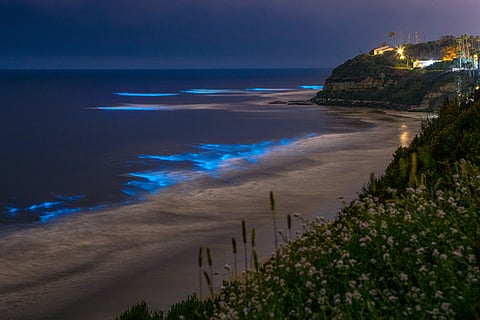

On certain nights along the California coast, the ocean seems to switch on. A wave breaks and the foam flashes blue. A surfer slices through the water and leaves a glowing outline. Even a quick splash can create a bright, electric shimmer. It looks like special effects, but it is biology.
The glow comes from dinoflagellates, tiny plankton that can multiply in large numbers and gather near the shore. In daylight, heavy blooms can tint the water brownish red, which is why people often call it a “red tide”. At night, the same bloom can produce blue light when the water is disturbed.
Here is the key detail. The light is not constant. It is a quick flash triggered by motion. When a wave crashes, when foam churns, or when someone steps into the shallows, the cells sense the physical jolt. Inside each cell, a chemical reaction briefly releases light. One flash is tiny, but a breaking wave can contain millions of cells flashing at once, which makes the shoreline glow.
These events are not guaranteed. Blooms tend to appear when coastal conditions favour rapid growth and when currents concentrate the plankton near beaches. The glow can shift from one stretch of coast to another as the water moves.
A sensible caution: the phrase “red tide” is a casual label. Some algal blooms can irritate skin or affect breathing, depending on the species and local conditions. If the water looks discoloured, smells unusual, or there are advisories, it is best to follow official guidance.