
Every morning, before stepping out of the house, most people ask the same question. Will it rain today? Should I carry an umbrella? Is it going to be hot or cold? The answers to these everyday questions come from a branch of science called meteorology.
Meteorology is the study of Earth’s atmosphere and the weather it produces. It helps us understand why clouds form, how storms develop, and what makes seasons change. Without meteorology, weather forecasts would be little more than guesses. With it, scientists can predict tomorrow’s rain, next week’s heatwave, and even the path of powerful cyclones.
The word meteorology may sound complicated, but the idea behind it is simple. The atmosphere is a giant blanket of air surrounding our planet. This air is constantly moving, warming, cooling and mixing. All weather, from a gentle breeze to a thunderstorm, happens because of these movements.
Meteorologists, or weather scientists, study many parts of the atmosphere. They look at temperature, air pressure, humidity, wind speed and rainfall. Each of these factors gives clues about what the weather might do next. When warm air rises and cool air sinks, winds are created. When moist air cools, clouds and rain can form. Meteorology connects all these pieces into a larger picture.
Weather observation has a long history. Thousands of years ago, people watched the sky carefully to decide when to plant crops or prepare for storms. Sailors studied winds and clouds to navigate oceans. But modern meteorology truly began in the nineteenth century, when new instruments made it possible to measure weather accurately.
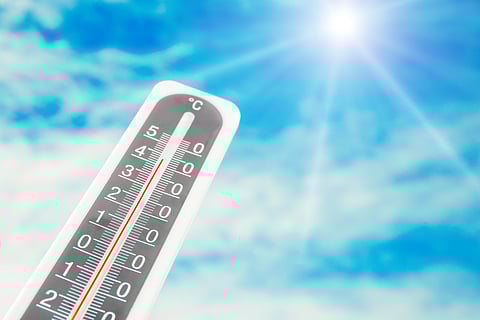
One of the most important tools was the barometer, which measures air pressure. Scientists noticed that falling pressure often meant bad weather was coming. Thermometers recorded temperature, while rain gauges measured rainfall. These simple instruments formed the foundation of early weather science.
The biggest revolution in meteorology arrived with technology. In the twentieth century, weather balloons began carrying instruments high into the atmosphere to collect data. Radar systems allowed scientists to track rain and storms in real time. Later, satellites gave meteorologists a view of Earth from space. For the first time, they could watch clouds move across entire continents.
Today, meteorology depends heavily on computers. Weather stations around the world collect huge amounts of information every hour. Supercomputers analyse this data using complex mathematical models. These models simulate how the atmosphere is likely to behave in the coming days. The forecasts we see on television or mobile phones are the result of millions of calculations.
Predicting weather is not always easy. The atmosphere is a chaotic system, which means small changes can lead to very different outcomes. This is why forecasts sometimes change from day to day. Short-term predictions, such as tomorrow’s weather, are usually very accurate. Long-term forecasts are more challenging because more variables come into play.
Meteorology is especially important during extreme events. Accurate cyclone warnings help coastal communities prepare and evacuate in time. Heatwave alerts allow hospitals and governments to plan for emergencies. Farmers rely on rainfall forecasts to decide when to sow seeds. Pilots and sailors depend on weather reports to travel safely.
Climate and weather are closely related but not the same. Weather describes what happens in the atmosphere over a short period. Climate refers to long-term patterns over many years. Meteorologists study both, helping scientists understand larger issues such as climate change and its impact on the planet.
India is a country where meteorology plays a crucial role. The annual monsoon affects millions of lives and livelihoods. Predicting the arrival and strength of the monsoon is one of the most important tasks for Indian meteorologists. Special centres track depressions in the Bay of Bengal and the Arabian Sea to warn of heavy rains and cyclones.
Modern meteorology also uses new tools like drones, ocean buoys and advanced satellites. Artificial intelligence is being tested to improve forecasts even further. Apps on smartphones now deliver minute-by-minute updates based on live data. What once took days to calculate can now be done in seconds.
Beyond forecasts, meteorology helps scientists understand natural disasters. Studying past storms teaches experts how to build safer cities and better early-warning systems. It also helps engineers design buildings, bridges and airports that can withstand strong winds and heavy rains.
For students, meteorology offers a window into how science connects directly to daily life. It combines physics, geography, mathematics and technology. A simple weather report is actually the final result of global teamwork among thousands of scientists and machines.