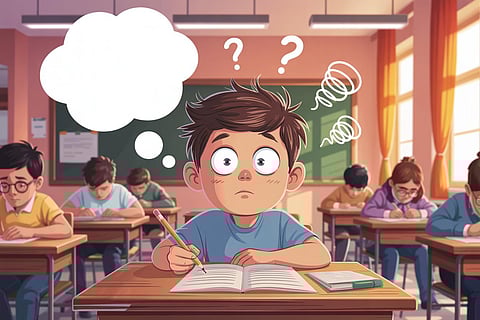

You turn the page. You read the question. And suddenly — nothing. Your mind goes blank. The answer you revised just yesterday has vanished. It’s a common exam experience, and the worst part is not the silence in your mind — it’s the panic that follows.
But here’s the truth: blanking out doesn’t mean you don’t know the answer. It usually means your brain is overwhelmed. Under stress, the part of your brain that stores information goes into lockdown mode — not forever, just temporarily.
So what can you do?
First, pause. Drop your pen, close your eyes for ten seconds, and take one deep, slow breath. This tells your brain: You’re safe. There’s time.
Second, move. Shift your attention to another question you can answer. This builds momentum and calms your system. Once your confidence returns, go back to the tricky one.
Third, rewrite the question in your own words. Sometimes the question feels scary just because it’s unfamiliar. Breaking it down helps you connect it to something you do know.
Blanking out isn’t failure — it’s a signal. Your job is not to panic, but to reset. Remember, exams don’t just test your knowledge. They test your calm. And the ability to return to yourself, even when your mind goes blank, is a skill that’ll help you far beyond school.