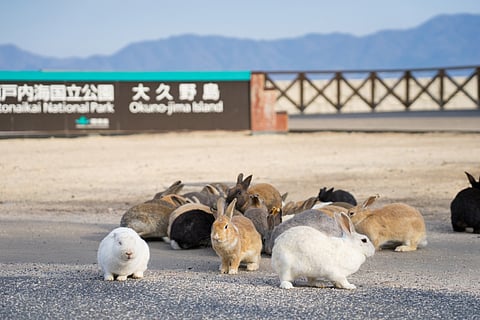

Step off the ferry at Ōkunoshima in Japan’s Seto Inland Sea and you might feel like you’ve wandered into a storybook. Small, curious rabbits hop out from bushes, circle your shoes, and even wait near benches as if they know visitors always bring snacks.
But the bunny takeover didn’t happen by magic. After World War II, the island was redeveloped as a public park. The rabbits seen today are believed to be descendants of domestic rabbits released in the 1970s—often linked to a story about schoolchildren setting a small group free in 1971.
Once rabbits were on the ground, they multiplied quickly. The island has no native predators like foxes, and visitors aren’t allowed to bring cats or dogs. Hunting is banned. With fewer threats, rabbits could spend more time grazing, breeding, and raising their young.
Tourism added another boost. Over time, the rabbits became used to humans and began to approach people instead of hiding. That friendliness is part of the island’s charm—but it also creates a problem. The rabbits have become dependent on tourist handouts, and their health can suffer if visitor numbers drop suddenly.
Ōkunoshima’s past carries a darker layer, too. Between 1929 and 1945, the island was used for secret chemical weapons production. Today, the Poison Gas Museum stands as a reminder of that history, even as the island is now famous for its furry residents.