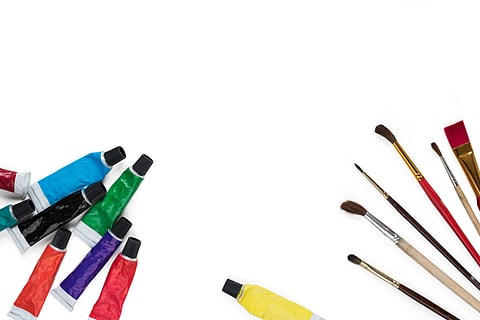

Before they arrived in your art box, watercolours had a much older, messier life. Thousands of years ago, cave painters in places like Spain and India would crush coloured stones, mix them with animal fat or spit, and smear them onto cave walls. These early paints were the first versions of watercolour, just without the fancy name.
In Ancient Egypt and China, artists began using water-based pigments on papyrus and silk scrolls. They would grind natural ingredients like saffron, charcoal or crushed gemstones, then mix them with water and a bit of gum to help them stick. These early watercolours were used to paint gods, ceremonies, animals and plants.
But the watercolours we know today began to take shape during the Renaissance in Europe. Artists like Albrecht Dürer made stunning paintings using water mixed with pigment and gum arabic. Over time, the recipe was refined and packaged into small, dry cakes that could be activated with water. These were perfect for travellers, botanists, and later, schoolchildren.
Today’s watercolours still follow the same basic formula: pigment plus binder. They are sold in pans or tubes, but their soul remains the same — a little colour, a little water, and a lot of imagination.