
Japan’s most unusual February custom
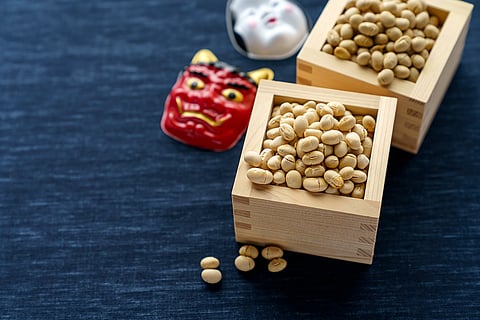
On a chilly evening in early February, homes across Japan echo with a lively chant. Children giggle, parents laugh, and roasted soybeans fly through the air. Someone in the family often wears a bright red or blue demon mask and pretends to be chased away. The chant rings out again and again: “Oni wa soto! Fuku wa uchi!” It means “Demons out! Good fortune in!” This is Setsubun, one of Japan’s most cheerful and unusual seasonal traditions.
Setsubun marks the day before the start of spring in the traditional Japanese calendar. Long ago, Japan followed a lunar calendar rather than the modern solar one. According to that older system, each new season began on a different date. Setsubun literally means “seasonal division,” and it was once celebrated four times a year. Over time, the spring version became the most important, and today it is the only one widely observed.
The heart of Setsubun is a custom called mamemaki, or bean throwing. The idea behind it is simple but meaningful. Beans are seen as symbols of purity and life. Throwing them is believed to drive away bad luck, illness, and evil spirits from the past year, while welcoming good fortune for the year ahead. Families toss beans out of doors, at windows, and sometimes directly at the person playing the role of the demon. The playful chaos is part of the fun.
After the beans are thrown, there is another small ritual. Each person eats a number of roasted soybeans equal to their age, plus one extra for good luck. A ten-year-old eats eleven beans, a forty-year-old eats forty-one. This act is thought to bring health and protection. It also gives everyone a chance to slow down and reflect on growing a year older.
Setsubun is not only a family celebration. Temples and shrines hold large public events where priests, celebrities, and local officials throw beans to crowds. People gather with open hands, hoping to catch a lucky handful. In some places, packets of beans include small prizes or good-luck charms. The atmosphere is festive and noisy, more like a street fair than a solemn ceremony.
The demon figure in Setsubun plays an important role. Known as an oni, it represents bad habits, misfortune, and anything negative that people want to leave behind. The oni is not meant to be truly frightening. Instead, it is a playful symbol of troubles that can be chased away with courage and good spirits. By driving the oni out of the house, families symbolically clean their lives for a fresh start.
Food traditions are just as important as bean throwing. In many regions, people eat a special sushi roll called eho-maki on Setsubun night. This thick roll is filled with several ingredients and eaten in silence while facing the lucky direction for that year. The direction changes annually based on the traditional zodiac calendar. Eating the entire roll without speaking is believed to bring good fortune.
Different parts of Japan celebrate Setsubun in their own ways. Some communities burn dried sardine heads and holly branches at their doorways to keep evil spirits away. Others decorate entrances with lucky charms or paper talismans from local shrines. Though the details vary, the purpose remains the same: to sweep away the old and invite in the new.
Children often learn about Setsubun at school, where they make paper oni masks and practise the famous chant. Teachers explain that the festival is not really about demons at all, but about personal growth. The “demons” can be laziness, anger, jealousy, or fear. Throwing beans becomes a playful way to think about improving oneself.
Setsubun also shows how closely Japanese traditions are connected to nature. It arrives at a turning point in the year, when winter slowly gives way to spring. Even though the weather may still be cold, the festival carries a sense of hope. Plum blossoms are beginning to bloom in some regions, and the days are growing a little longer. Setsubun celebrates that quiet shift.
In modern Japan, supermarkets and shops prepare for Setsubun weeks in advance. Bags of roasted beans, colourful masks, and ready-made eho-maki rolls fill the shelves. Television programmes show live broadcasts from famous temples. Despite busy city life and changing times, the festival remains popular because it is simple, joyful, and easy to share.
At its core, Setsubun is about renewal. Everyone has worries and mistakes they would like to leave behind. Everyone hopes for a year filled with health, happiness, and good luck. By laughing together, tossing beans, and eating a meal with family, people mark that hope in a friendly, everyday way.
When the last bean has been thrown and the laughter fades, homes feel a little lighter and brighter. The imagined demons are gone, and a new season is ready to begin.