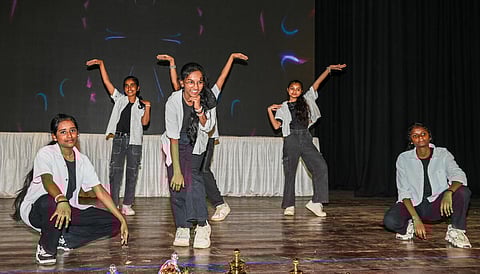

Day 3 of DHiE Expressions 2025 transformed Bal Bhavan into a vibrant, rhythm-filled arena as more than 350 students from across Bengaluru took the stage for the festival’s much-awaited dance showcase.

Organised by Deccan Herald in Education (DHiE) in association with the Bal Bhavan Society, the final day celebrated movement, expression and storytelling through choreography. And from the moment the music began, it was clear that this finale would be remembered for its colour, creativity and uninhibited joy.
Students competed in two categories — junior and senior — each bringing a distinct style and spirit to the stage. The juniors, many of them dancing at a formal event for the first time, quickly captured the hearts of the audience. Their neat formations, earnest expressions and “cute coordination”, as several teachers affectionately put it, added a charm that set the tone for the day. What they lacked in experience, they made up for in enthusiasm — hands pointed a little too high at times, a beat missed here and there, but never once losing the determination to give their best.
The performances explored a wide range of themes, allowing students to interpret everything from environmental awareness to cultural narratives. Pieces on underwater pollution used sweeping arm movements and fluid formations to evoke marine life struggling against waste. Groups dressed in glittery blue costumes moved like schools of fish, creating visual waves on stage.
Another set of performances touched on substance abuse, with dancers portraying vulnerability, peer influence and recovery through expressive storytelling. Their red, black and white outfits underscored the intensity of the subject, drawing attention to the power of dance as a medium for social awareness.
Folklore came alive when students performed choreographies inspired by Kanthara, blending folk movement, dramatic rhythm and earthy energy. The audience responded instantly, clapping along to the powerful beats. In contrast, teams exploring patriotism offered graceful salutes, fluid group lines and moving imagery accompanied by instrumental scores, using dance to celebrate national pride.
A performance based on Operation Sindhoor showcased teamwork and precision, while pieces on depression used shadow motifs, slow transitions and expressive gestures to convey emotional depth. The thematic diversity highlighted how comfortable students have become with treating dance as both entertainment and commentary.
The visual impact of the show was heightened by the careful attention to costumes, which ranged from elegant traditional classical attire to crisp casual tux-style outfits for contemporary pieces. Sequins, colours, drapes and accessories all came together to build an atmosphere that felt celebratory from start to finish.
Watching and evaluating these performances was a distinguished jury panel: Odissi dancer Madhulita Mohapatra, Prof. Nancy Abraham from Christ University, and contemporary dancer and choreographer Manoj Dupati. The judges moved between groups, quietly observing footwork, expression, synchronisation and thematic interpretation. Each brought a distinct perspective — classical expertise, academic insight and contemporary understanding — creating a rounded evaluation process.
Their presence added both encouragement and seriousness to the competition. Teachers noted that students performed with heightened focus, aware that industry professionals were watching closely. The jury later commented on the confidence and commitment they witnessed, especially among the younger groups, who embraced the stage with infectious enthusiasm.
Addressing the gathering, B R Naidu, Chairman of the Bal Bhavan Society, praised the initiative. “Platforms like DHiE Expressions give students an opportunity to gain confidence and excel in dance performances,” he said, emphasising the importance of encouraging artistic exposure at a young age.
As the final applause echoed across Bal Bhavan, Day 3 brought the three-day festival to a warm, spirited close. The dancers, still glowing from the stage lights and excitement, gathered in clusters — comparing steps, laughing over small mistakes, and posing for photos in their vibrant costumes.
DHiE Expressions Day 3 showcased more than choreography; it showcased the confidence, imagination and expressive power of young performers who used movement to tell stories far larger than themselves. It was a fitting finale to a festival built on creativity, curiosity and the joy of learning through art.