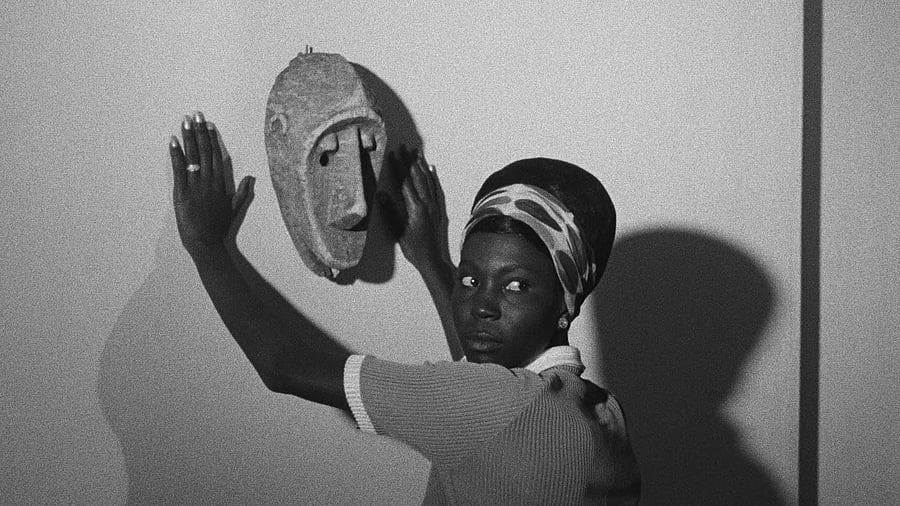
Credit: Special Arrangement
African filmmaker Ousmane Sembène’s words — ‘If Africans do not tell their own stories, Africa will soon disappear’ — hint at Africa’s fragile position within today’s geopolitics. The father of African cinema, Sembène emphasised on this sentiment throughout his career to promote authentic African storytelling against colonial narratives. “Why be a sunflower and turn towards the sun? I am myself the sun,” he expressed in the documentary ‘Caméra d’Afrique’ (1983), which commemorated 20 years of African cinema.
This year, the Bengaluru International Film Festival (BIFFes) has curated a special section, ‘Chronicles of Africa’. It features 13 films and documentaries made by filmmakers from across Africa.
Vinayak Bhat, chief programmer of BIFFes, says he is fascinated by the diversity of African cinema and emphasises on the importance of showing these films.
“When we curate retrospectives and special focus, it’s usually Euro-centric or Southeast Asian. It’s rarely focused on Africa or Latin America. So, from that point of view, it becomes important. African cinema is equally varied but it’s not acknowledged,” he explains. When it comes to Asian cinema, for example, a clear-cut difference between Iranian, Indian and Japanese is acknowledged. But African cinema is always put under one category, Vinayak explains. “Senegal cinema is very different from Burkinabé, which is very different from South African and so on,” he adds.
The films are being sourced from Alliance Française de Bangalore.
Brief history
Sembène’s ‘Borrom Serret’ (The Wagoner) is often considered the first African film. It was made in 1963, 68 years after cinema was invented by Lumiere Brothers.
African cinema is focused on the sub-Saharan parts of the continent. The term emerged after the 1960s decolonisation of the continent and defines films by Black African filmmakers. Most African filmmakers are self taught or learned filmmaking in Europe. They emerged as pioneers by depicting their vision of the continent. These filmmakers include Oumarou Ganda (Nigerien), Djibril Diop Mambéty (Senegalese), Souleymane Cissé (Malian), Idrissa Ouédraogo (Burkinabé), Med Hondo and Safi Faye (Senegalese).
Early filmmakers explored post-colonial identity with a focus on realism, social commentary, and the tension between traditional life and modernisation. There was a need to show the realities of Africa and at the same time, a need to escape Western influence. Sembène’s ‘Black Girl’ (1966), for example, explored a young Senegalese girl’s fight for identity in France where she is reduced to a servant. It was based on a real life incident.
Touki Bouki: Djibril Diop Mambéty’s ‘Touki Bouki’ is considered a masterpiece of African cinema and a landmark of avant-garde filmmaking.
Credit: Special Arrangement
Mambéty’s ‘Touki Bouki’ (1973), considered a masterpiece, explores the disillusionment of modern youth who want to escape traditional society, in search of westernisation. ‘Soleil Ô’ (1970), ‘Saitane’ (1973), ‘Muna moto’ (1975), ‘Kaddu Beykat’ (1975) are among other post-colonial narratives exploring life in different parts of Africa.
By the mid-70s, according to ‘Caméra d’Afrique’, filmmakers deliberately delved into the past, into the depths of African memory. They weren’t satisfied with showing modern Africa, because injustices must always be exposed and truths revealed. Sembène’s ‘Ceddo’ (1977), set in pre-colonial Senegal explored the clash of traditional African beliefs, rising Islam, and European colonialism. ‘La Chapelle’ (1980) and ‘Wend Kuuni’ (1982) are other examples.
Reclaiming narratives
Historically, African cinemas have faced strong competition from Western films, which shaped local audiences’ tastes, spread stereotypes, and controlled how movies are distributed. At a time when cinema was used by governments for propaganda and by distributors for profit, African filmmakers were fighting for independent cinema.
According to film critic M K Raghavendra, African cinema is categorised by three currents: recreation of colonial oppression and the struggle for freedom; clash between tradition and modernity; and the condition of the immigrants in European society. Music is often used as a way to celebrate tradition, and tribal belief is treated as superstition and backward.
Yeelen: ‘Yeelen’ (1987), directed by Souleymane Cissé, portrays pre-colonial West Africa.
Credit: Special Arrangement
Martin Scorsese, through his African Film Heritage Project, is restoring and preserving African films, in partnership with the Pan African Federation of Filmmakers and UNESCO. Restored films include ‘Touki Bouki’, ‘Soleil Ô’, ‘Black Girl’, ‘La Femme au couteau’ (1969), ‘Muna Moto’ (1975), ‘Yeelen’ (1987), ‘Al Momia’ (1969), and ‘Finye’ (1982). Some of these restored films will be a part of the programme.
Vivekananda Kodandaraman, cinephile from Bengaluru, says, “African filmmakers have made films under extreme conditions which shows the diversity of their culture. Unlike cinema from other countries, very few films like ‘Touki Bouki’ are known to people.”
With cinema being the most accessible form of art, reaching a wider audience than literature, as Sembène points out, African cinema is crucial for reclaiming the continent’s narrative and challenging global stereotypes.