Film censorship woes resurface every once in a while in India. Indian cinema has seen two major changes post 2014 — a rise in propaganda films supporting the ruling BJP’s ideology, and severe censorship or banning of movies that are critical of the BJP-led government and groups like the RSS, or for ‘hurting Hindu religious sentiments’. The last time movies went through this kind of censorship was during Emergency, when films were targeted for political dissent and any content seen as undermining the regime.
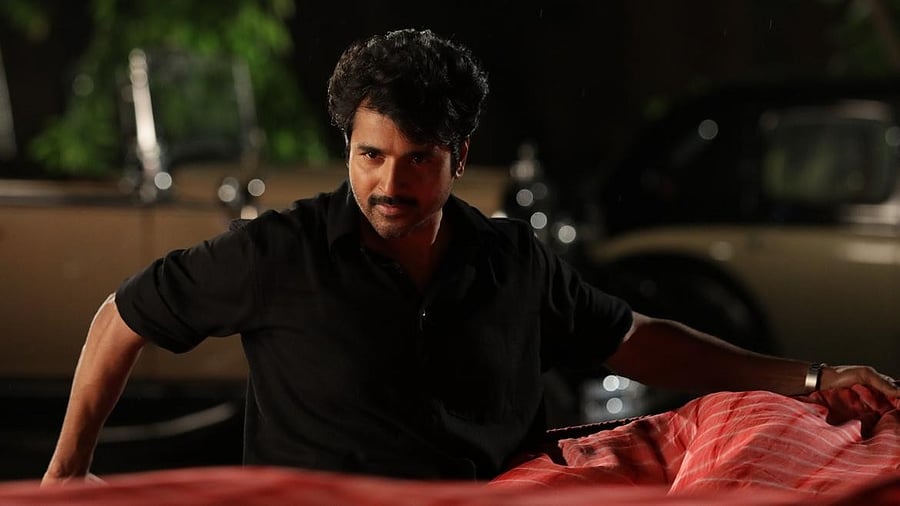
The latest movies to fall into trouble are Vijay’s ‘Jana Nayagan’ and Sivakarthikeyan’s ‘Parashakti’. Both the films have faced trouble from the Central Board of Film Certification (CBFC) and the intent is evidently ‘political’. ‘Parashakti’, a fictional retelling of the anti-Hindi agitation in Tamil Nadu during the 1960s, faced 25-odd cuts from the board.
While ‘Parashakti’ heeded the CBFC’s recommendations and released the movie, the fate of ‘Jana Nayagan’ is yet to be decided by the Madras High Court. The movie, purported to be Vijay’s swan song — before he enters politics — is said to be a three-hour promotion for the actor’s political career. It is speculated that the BJP wants Vijay to join the BJP-alliance in the upcoming April elections.
Role of certification board
The modifications document of ‘Parashakti’, accessed by Showtime, showed objections to dialogues like, ‘let the fire spread’, ‘Hindi erased my dream’, ‘anti national scum’ and to visuals of cow dung being applied on a post office sign board, and the burning of the effigy, among others.
In countries like the US, the certification board reviews a film and classifies it for a particular audience — G, PG, PG-13, R, and NC-17. However, the CBFC functions as a censor board, with the ruling parties often using it to their benefit.
Film educator and critic, Basav Biradar, says that the only function of a film certification board is to decide the level of certification for the audience viewing the film. “A film certification board should ideally not be asking for cuts in a film. Unfortunately, in India, it has extended to censorship. However, if the filmmaker wants the certification to be changed — from adult only to PG-13 for example — then the board can recommend cuts to make the film ready for that particular level of certification,” he shares.
Cuts to bans
The CBFC, in recent times, has also faced backlash for demanding silly, unnecessary cuts from foreign filmmakers — especially blurring the ‘Superman’ kiss, when Indian movies with far more vulgar scenes are just classified as U/A. ‘The Apprentice’, a biopic of Donald Trump was blocked from exhibition in India after the director, Ali Abbasi, refused to make cuts demanded by the CBFC. “I ran away from Iranian censorship only to meet corporate censorship in the US. Now India. Really? Censorship seems to be an epidemic at the moment,” Abbasi was quoted as saying by The Guardian.
“In India, the film certification board and the law enforcement bodies collaborate and then ban a film. The banning of film can happen only through the law enforcement body and not a film certification board, says Biradar. Director Honey Trehan’s ‘Panjab ’95’ — about human rights activist Jaswant Singh Khalra who was abducted and murdered by the Punjab police for exposing police atrocities in the state — is a recent example. The film has faced over 128 cuts from the CBFC. Among the many cuts demanded by the CBFC is ‘Punjab police’. The makers went to court but were reportedly pressured to withdraw their case, leaving the film’s release in a state of limbo. Amandeep Sandhu, whose book ‘Panjab: Journeys Through Fault Lines’, inspired the film, says, “The film has run into trouble because the police officer who was involved in Khalra’s abduction and murder was regarded as the ‘supercop who saved Punjab from terrorism’. And the BJP is the champion of police in India.”
Lawrence Liang, lawyer and legal researcher, says that the Cinematograph Act allows the CBFC to suggest cuts, making it more like a censor body. The language of the Cinematograph Act is so broad that anything can be made out of it. “It replicates the wide language of article 19 (2) and determines that ‘A film shall not be certified for public exhibition if, the film or any part of it is against the interests of the sovereignty and integrity of India, the security of the State, friendly relations with foreign States, public order, decency or morality, or involves defamation or contempt of court or is likely to incite the commission of any offence’. This provides extremely wide discretionary powers that can be utilised by governments towards political ends,” he shares.
For example, the 2023 two-part BBC documentary ‘India: The Modi Question’ was banned by the government of India. Kanchan Gupta, senior advisor of ministry of information and broadcasting shared a tweet stating that the documentary was found to be “undermining the sovereignty and integrity of India”.
Earlier this week, veteran actor and politician Kamal Haasan called for a “principled relook at the certification process”. In an open letter, the actor called for “defined timelines for certification, transparent evaluation and written, reasoned justification for every suggested cut or edit”.
But, how will it be more transparent when the recruitments are made by the ruling political parties? Biradar believes that the only way the process can be free of political control is if the board has complete freedom and there is no pressure or influence of the government or the ruling party, to appoint its personnel. “The appointed personnel should also be sure that there are no repercussions for them if they do not toe the party line,” he adds.