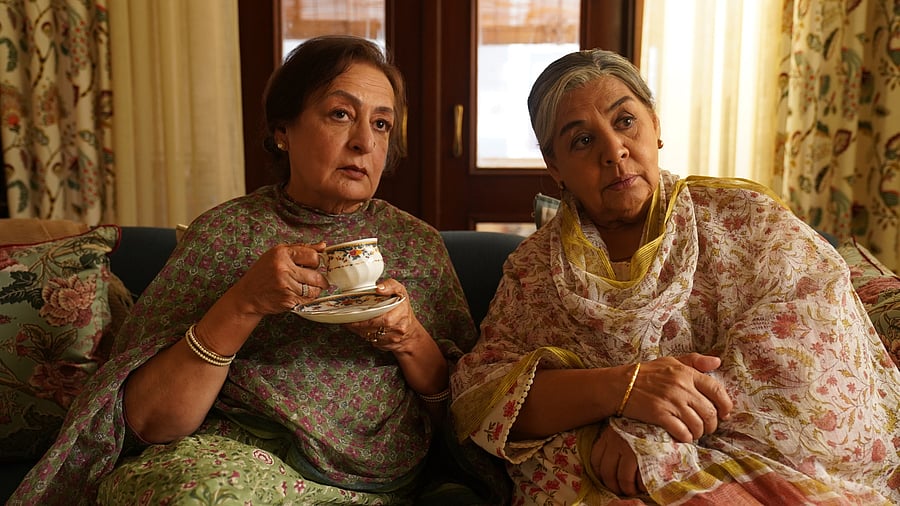
While the theatrical scene in 2025 for Hindi cinema was dismal — with only three blockbusters in ‘Dhurandhar’, ‘Chhaava’ and ‘Saiyaara’ and a few hits and tepid successes — the OTT scene was strobe-lit with several notable movies.
Brilliantly made ‘The Storyteller’, ‘The Great Shamsuddin Family’ (Jio Hotstar) and ‘Baramulla’ (Netflix), socially impactful fares like ‘Mrs’ (Zee5), ‘The Mehta Boys’ (Prime Video) and ‘Aap Jaisa Koi’ (Netflix), entertainers ‘Dhoom Dhaam’ (Netflix) and ‘Inspector Zende’ (Netflix), the stylised ‘Detective Sherdil’ and ‘Jewel Thief — The Heist Begins’, the gripping ‘Bhagwat: Chapter 1: Rakshas’ and the fairly involving ‘Raat Akeli Hai: The Bansal Murders’ topped the scene.
On the other hand, overrated fares like ‘Costao’ and ‘Tehran’ (Zee5), ‘Stolen’ (Prime Video), ‘Sarzameen’ (Jio Hotstar), ‘Kaalidhar Laapataa’, ‘Nadaaniyan’ and ‘Mandala Murders’ (Netflix) attempted to cash in on media-hype, though there was lot to desire in the way they were conceived and made.
Veteran distributor-exhibitor Raj Bansal says that while there are multiple factors for the bleak big-screen scenario, there are three main reasons for the OTT splurge.
“First, filmmakers are not confident about their theatrical prospects. Second, it is difficult nowadays to get good screens and correct show timings as multiplexes play favourites. Three, filmmakers get a decent price with online releases.”
Bansal adds, “But OTT releases score over films in theatres for one main reason that simply cannot be compared: at most, you are paying just Rs 10 per movie for a family to watch it at home, at your convenience. But for a theatrical watch, you need to spend on tickets, travel, parking and food. That is why audiences want value for the big money they have to spend on a theatrical release!”
Madhuri Dixit Nene, who also acted in the OTT film, ‘Maja Ma’, told a tabloid, “Nowadays, by the time people come home from work, it is 8.30 or 9 pm and going out to watch a film, except on weekends, is difficult!” Therefore, watching a film on OTT is “practical and cost-effective”.
Are not a lot of such films planned for OTT release? “Yes, but about 20 percent of them aim for a theatrical release, so OTT is their last option!” says Bansal. Agrees filmmaker Ananth Narayanan Mahadevan (‘The Storyteller’). “I think every film is a commercial proposition and if possible, I will release every film of mine in a movie hall. ‘The Storyteller’ had all the elements of a theatrical release: it was a Satyajit Ray story told with humour and wit. From Busan and Palm Springs to Kerala and IFFI, the response at film festivals was phenomenal. I told Jio Studios this, but they decided on the OTT route. But now I think that this was a blessing in disguise! Theatre-owners don’t have the patience needed for a film to grow by word-of-mouth, so if my first week collections had not been profitable, I would never have got a second week’s chance,” he says.
Aditya Suhas Jambhale, who directed ‘Baramulla’, admits, “I would have loved a theatrical release, as visuals, sound and music in films are best experienced in a movie hall. But the producer has to calculate his risks and I must support his decision. On the high side, Netflix is a classy platform and my film saw release in 190 countries.”
Weighing in on the dilemma, Boman Irani says, “OTT worked best for my film, ‘The Mehta Boys’. Initially I was sceptical about releasing it online, but someone told me that all our favourite films down the decades, Indian or international, have been seen most on television — like 35-year-olds watching ‘Star Wars’ (1977) that was released before they were born.”
Is there a way to ascertain their success quotient? Apparently not, says Bansal. But Irani asserts, “In theatres, if a film does not make big numbers despite a successful return of investment, it can be considered a flop. Here it will be considered a success based on the response it gets. So the biggest benefit of OTT is that there is no pressure on you. And it’s been a great year watching so many extraordinary films that otherwise may not have been made at all, as there is no pressure to please a certain kind of people.”