The operation was carried out by the Army, SDRF Bomdila, SSB, ITBP and the district police, Tawang SP DW Thongon said.
Credit: X/@
Itanagar: The body of the second tourist from Kerala who drowned in the frozen Sela Lake in Arunachal Pradesh’s Tawang district was recovered on Saturday morning, police said.
The joint search operation resumed at 8 am after being suspended on Friday evening due to poor visibility.
The operation was carried out by the Army, SDRF Bomdila, SSB, ITBP and the district police, Tawang SP DW Thongon said.
Four divers from SDRF Bomdila in nearby West Kameng district and the Army were deployed for the operation, he said.
"Poor underwater visibility initially hampered the search, but around 10.10 am, the body of the second tourist was recovered," the SP said.
Post-mortem examinations of the deceased are being conducted, after which the bodies will be handed over to their relatives, he added.
The deceased were identified as Dinu (26) and Mahadev (24).
They were part of a seven-member tourist group that had arrived in Tawang via Guwahati, Thongon said.
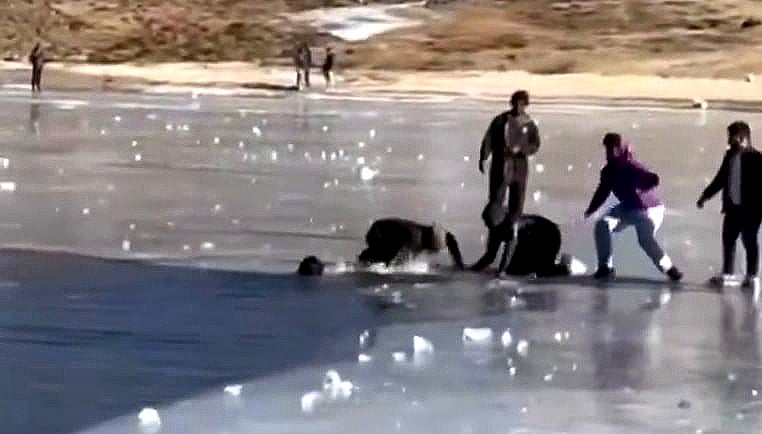
"The incident occurred in the afternoon when a member of the group slipped into the frozen lake and began to drown. Dinu and Mahadev entered the lake in an attempt to rescue him. While the third tourist managed to come out safely, the two were swept under the icy water," he said.
The SP said the district administration received information about the incident around 3 pm on Friday, following which a joint rescue operation was launched involving the district police, central forces and the State Disaster Response Force (SDRF).
Thongon said warning signboards have been installed at Sela Lake and other tourist spots, clearly advising visitors not to walk on frozen lakes.
He added that the district administration had also issued an advisory in December, cautioning tourists that frozen waterbodies are unsafe as the ice may be unstable and unable to support human weight.
Situated at an altitude of over 13,000 feet, Sela Lake is a popular tourist destination but poses significant risks during winter due to extreme cold and fragile ice cover.