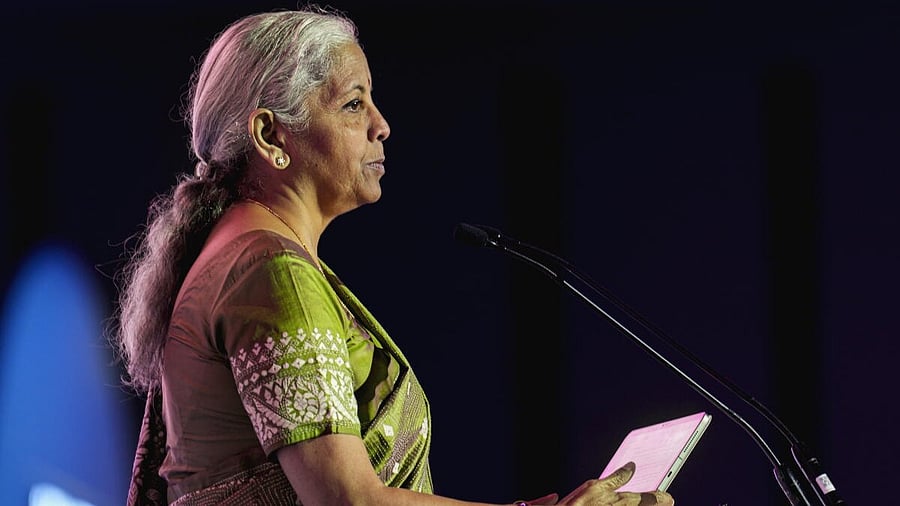
Finance Minister Nirmala Sitharaman.
Credit: PTI Photo
New Delhi: The Coaching Federation of India has urged Finance Minister Nirmala Sitharaman to rationalise Goods and Services Tax on coaching and supplementary education services in the Union Budget, claiming the current tax structure is pushing up costs for parents and squeezing small education businesses.
In a representation submitted on January 28, the Coaching Federation of India (CFI), a New Delhi-based body that claims to represent a large number of coaching centres across the country, sought a reduction in GST on coaching services to 5 per cent or a complete exemption, stating that unlike manufacturing or trading businesses, coaching institutes have limited scope to offset tax through input tax credit.
“As a result, the Goods and Services Tax (GST) becomes a direct add-on to student fees, effectively shifting the burden to parents,” the Federation stated in its letter to the finance minister.
Stressing that coaching can no longer be treated as a discretionary service, Keshav Agrawal, Vice President, CFI, said, “With competitive exams such as JEE, NEET, CUET, CA, CLAT, SSC and UPSC becoming central to academic and career pathways, coaching has become a necessity for many middle-class families,”
In its letter, the CFI also flagged the Rs 20 lakh GST exemption threshold, calling it outdated in an era of rising rents, salaries and operating costs.
It proposed raising the limit to Rs 1 crore for coaching and supplementary education services, saying the existing cap forces even small centres with thin margins into the tax net, while larger chains benefit from scale and compliance capacity.
According to the Federation, the current tax regime is also “distorting” the sector by encouraging informality, with some small centres opting to remain unregistered or parents preferring “no-GST” options.
The Federation suggested that a more balanced tax structure would improve voluntary compliance, make education more affordable and align with national goals under the National Education Policy-2020.
It also sought a stakeholder consultation with the finance ministry to present ground-level data before the Budget is presented on February 1.