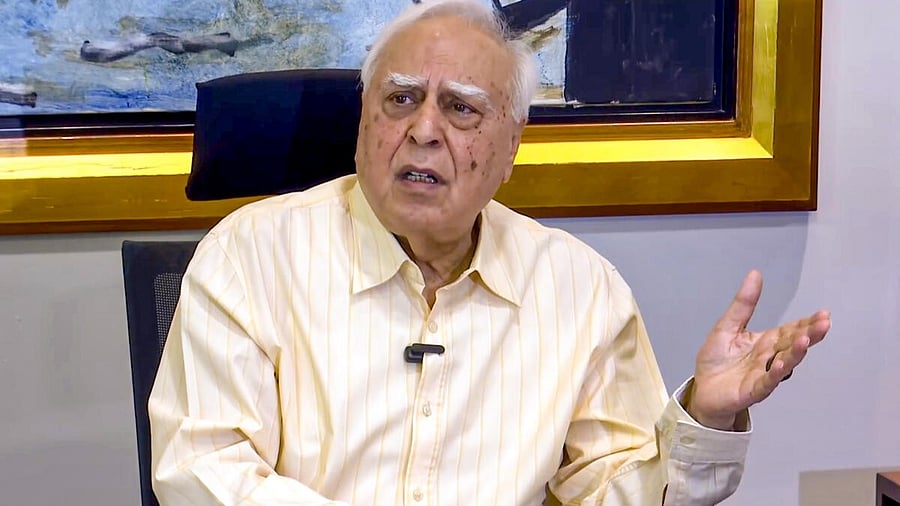
Kapil Sibal
Credit: PTI Photo
New Delhi: Amid the row over the UGC Equity Regulations, Rajya Sabha MP Kapil Sibal on Saturday hit out at the Modi government, saying its consistency to not consult anybody is reflected in all its decisions.
However, Sibal, who was the Union Minister of Human Resource Development in the UPA-II government, asserted that it would not be appropriate for him to give his opinion on the matter as it is pending before the Supreme Court.
"The matter is pending in the Supreme Court, I think it is inappropriate for me to render any opinion on it, except on a larger perspective (that) in this country, we have to take every section of the society with us," he told PTI in an interview when asked about the controversial Equity Regulations of the University Grants Commission.
"India will become a great nation, we talk of Viksit Bharat, only when all sections of the society are taken care of, from the policy standpoint, from the implementation standpoint so any attempt to create divisions within society is ultimately harmful for the future of the nation. That has nothing to do with the UGC regulation; it is a general perception that must be taken into account because we are all citizens of India first, then we belong to a community, to a caste, to a region, then we have a certain language," the Independent Rajya Sabha MP said.
This is such a diverse country that diversity should be taken to be an advantage because it allows for a consideration of the concerns of every section of society, he said.
"So, if you start creating problems within the society, the future of India would be at stake," Sibal said.
The Supreme Court last Thursday stayed the recent UGC equity regulations on preventing caste-based discrimination on campuses, saying the framework is "prima facie vague", can have "very sweeping consequences" and may end up dividing the society with a "dangerous impact".
The top court also sought responses by March 19 from the Centre and the UGC on three pleas against the University Grants Commission (Promotion of Equity in Higher Education Institutions) Regulations, 2026, on the grounds that caste-based discrimination is defined strictly as discrimination against members of the SCs, STs and OBCs.
On whether the issue could have been handled better, Sibal said, "I don't know better or worse, I have no idea. The normal since 2014, when they (Modi government) came to power, is that they never share their views with anybody. So, the consistency of their not consulting anybody is reflected in every decision that they take." The new regulations mandating all higher education institutions to form "equity committees" to look into discrimination complaints and promote equity were notified on January 13.
They also mandated that these committees must include members of the Other Backward Classes (OBCs), the Scheduled Castes (SCs), the Scheduled Tribes (STs), persons with disabilities, and women.
The new regulations replace the UGC (Promotion of Equity in Higher Educational Institutions) Regulations, 2012, which were largely advisory in nature.
Amid protests by students over these regulations in many states, Union Education Minister Dharmendra Pradhan assured there would be no discrimination against anyone, and the rules would not be "misused".
Staying the regulations, the apex court said petitions challenging the University Grants Commission (Promotion of Equity in Higher Education Institutions) Regulations, 2026, raise substantial questions of law and framed four such questions for consideration.
A bench of Chief Justice Surya Kant and Justice Joymalya Baghchi observed that the regulations suffer from "certain ambiguities" and that "the possibility of their misuse cannot be ruled out".
Meanwhile, on the Economic Survey calling for re-examining the RTI law, Sibal said he does not know to what extent it seeks to re-examine the Right to Information.
"There are already exceptions in the RTI that information that relates to the security of the state, information that relates to certain financial matters, will not be revealed. I don't know, to what extent they want to not allow RTI, which I think is a basic democratic right," he said.
"I liked to be informed as to what the government is doing. The government, in any case, does not give us the right data, if you debar people from RTI, it would do great damage to society," he added.