
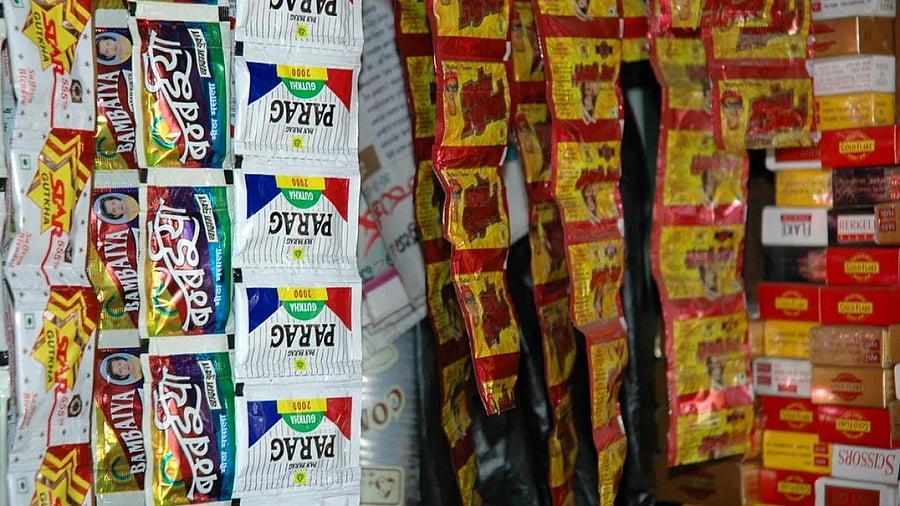
The Health Security se National Security Cess Bill, 2025, seeks to levy cess on the production of specified goods such as paan masala.
Credit: DH File Photo
Union Finance Minister Nirmala Sitharaman introduced two bills in the Lok Sabha on Monday to levy excise duty on tobacco and tobacco products, and a new cess on manufacturing of paan masala and any other items notified by the Central government to meet expenditure on national security and for public health.
The Central Excise (Amendment) Bill, 2025, will replace the GST compensation cess, which is currently levied on all tobacco products like cigarette, chewing tobacco, cigars, hookahs, zarda, and scented tobacco.
The Central Excise (Amendment) Bill, 2025, seeks "to give the government the fiscal space to increase the rate of Central excise duty on tobacco and tobacco products so as to protect tax incidence", once the GST compensation cess ends, according to the statement of objects and reasons of the Bill.
The Health Security se National Security Cess Bill, 2025, seeks to levy cess on the production of specified goods such as paan masala.
The government may notify any other goods on whose manufacturing such a cess can be levied.
Sin goods such as tobacco and paan masala currently attract a GST of 28 per cent, plus a compensation cess that is levied at varied rates.
Once the compensation cess ends, sale of tobacco and related products will attract GST plus excise duty, while paan masala will attract GST plus the 'Health Security se National Security Cess'.
Since the GST rate of 28 per cent has been done away with, such sin goods will be subject to the highest GST slab of 40 per cent.
"It is proposed to levy the Health Security se National Security Cess to contribute towards the twin purposes of enabling targeted utilisation for public health, as well as national security," according to the statement of objects and reasons of the Bill, as reported by PTI.
The cess shall be in addition to any other duties or taxes chargeable on the specified goods under any law for the time being in force, it added.
Such businesses will have to file a self-declaration of all machines or processes for each factory or premises, and the cess would be calculated in the aggregate for each such location, it said.
Compensation cess mechanism
At the time of the introduction of the GST on July 1, 2017, a compensation cess mechanism was put in place for 5 years till June 30, 2022, to make up for the revenue loss suffered by States on account of GST implementation.
The levy of compensation cess was later extended by four years till March 31, 2026, and the collection is being used to repay the loan that the Centre took to compensate States for the GST revenue loss during the Covid-19 period.
Since that loan repayment is going to be fully repaid sometime in December, the compensation cess will cease to exist.
On September 3, 2025, the GST Council had decided to continue with the compensation cess on tobacco and paan masala till the loans taken are repaid.
On other luxury items, the compensation cess ended on September 22, when the GST rate rationalisation was implemented with just two slabs of 5 per cent and 18 per cent. A 40 per cent rate was fixed for ultra-luxury goods, aerated drinks and other demerit goods.
The Central Excise (Amendment) Bill, 2025, and The Health Security se National Security Cess Bill, 2025 will ensure that the tax incidence on sin goods like tobacco and paan masala remains the same after discontinuation of the compensation cess.
(With PTI inputs)