
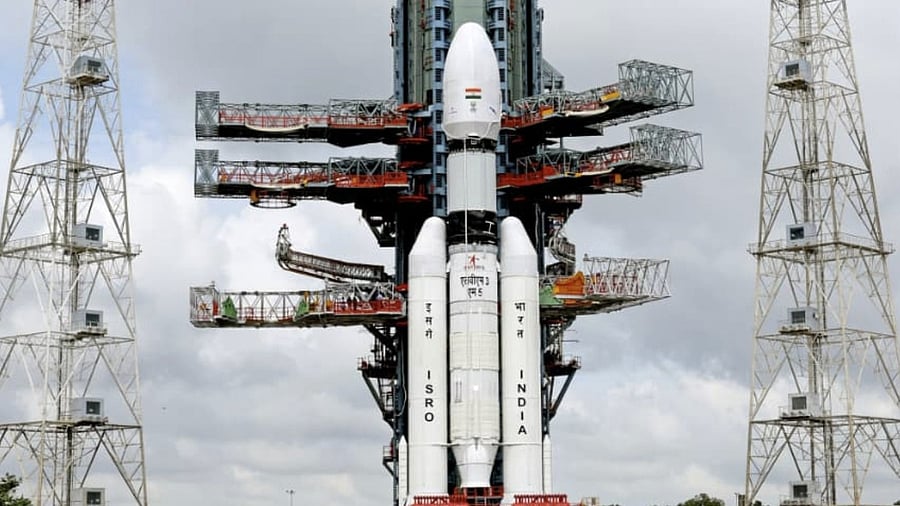
GSAT-7R.
Credit: X/ @PIB_India
New Delhi: The Indian Navy’s second satellite CMS-03 would provide the maritime force much more bandwidth over the Indian Ocean region, boosting the force’s ability to keep a watch on the high seas between the Gulf of Aden on the west and the Strait of Malacca on the east.
The satellite, also known as GSAT-7R comes 12 years after the first naval satellite GSAT-7, which is now at the fag end of its operational life.
“This is India’s heaviest communication satellite till date, weighing approximately 4,400 kg, and includes many indigenous state-of-the-art components developed specifically to meet the Indian Navy’s operational requirements,” an official said.
In comparison, GSAT-7 weighed 2,650 kg and carried Ku-band, S-band, C-band and ultra high frequency band transponders. GSAT-7R will be having similar transponders but in higher numbers.
GSAT-7R will provide robust telecommunication coverage across the Indian Ocean region as its payload includes transponders capable of supporting voice, data, and video links over multiple communication bands. The number of transponders is more than the first one.
Navy sources said the new satellite would significantly enhance connectivity with high-capacity bandwidth, enabling seamless and secure communication links between ships, aircraft, submarines, and Maritime Operations Centres of the Indian Navy.
“This satellite will be a game-changer for our maritime and national security, providing advanced, secure communication channels that are critical in the Indian Ocean Region and mainland,” Lt Gen AK Bhatt (Retd), Director General, Indian Space Association.
The navy gets its second communication satellite at a time when the armed forces are putting more emphasis on space-based technologies. The third phase of the space-based surveillance system – approved by the Union Cabinet - is to be put into motion by 2027-28.
The Indian Space Research Organisation is readying a second launch pad at Kulasekarapattinam in Tamil Nadu primarily for private companies including the start-ups to launch a variety of earth observation and imaging satellites.
Also the ISRO has signed a contract with Hindustan Aeronautics Limited for commercial launch of Small Satellite Launch Vehicles that can be used by private firms to launch satellites for civilian and military purposes.