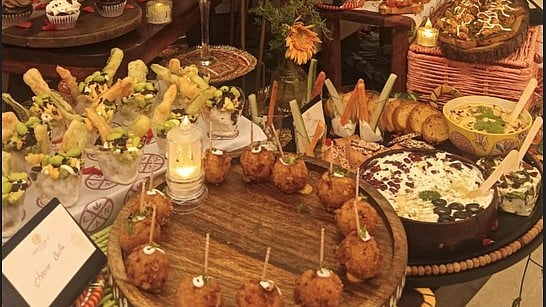
A grazing table, curated by Jyoti Kariwala was the centre of attraction at a house party in Bellandur.
House parties in Bengaluru this December stood out for their elaborate spreads, dominated by appetisers, and presented tastefully. Many hosts hired professional chefs, while demand for bartenders exceeded availability. In some cases, per-plate costs ranged from Rs 4,000-Rs 5,500 for intimate gatherings of 10, dropping to Rs 1,500-Rs 2,500 for larger groups. These parties were hosted not only at independent houses and farmhouses, but also in smaller apartments, largely by people above the age of 35.
Assorted appetisers
Grazing tables, which gained popularity in India after the pandemic, were a common fixture, fuelled by social media buzz. These large displays of cheeses, breads, fruits, meats, and bite-sized snacks allow guests to nibble at their own pace. “They look beautiful, they are not messy, and from a catering perspective, they appeal to diverse tastes,” says Amiel Guerin, chef-founder of Amiel Gourmet.
Smaller formats, called grazing boards or platters, moved even faster. Jyoti Kariwala, owner-founder of Lemon Krust, made brisk sales delivering her 12×12 inch disposable grazing boards, priced at Rs 2,000. “Each serves five people and includes seven to eight items,” she says. On Guerin's front too, the grazing boards performed "superbly well" in delivery model. On BookMyChef, clients wary of imported cheese prices opted for mezze-based grazing boards, also featuring Arabian and Mexican salads and English tea biscuits, says chief marketing officer Saurabh Agrawal. It's a platform for booking chefs for private events.
Tapping into the growing interest in regional flavours, Karan Upmanyu’s team at Push Pause Hospitality curated an Indian-inspired grazing table for Christmas. It featured south Indian snacks like achappams, murukkus, nevris, and kulkuls, paired with a yoghurt and bathua dip, and Indian-made cheeses like brie, and goat cheese with pistachios.
Appetisers also dominated the orders at Homestyle Food by Home Chef Sital. “Last year, clients asked for about five starter varieties. This year, it was double or more, with fewer main-course dishes,” says owner Sital Garodia.
Exotic ingredients
Guerin took on fewer house parties this year to focus on elevating festive food with high-quality produce and techniques. And it helps that clients are willing to spend more towards year-end, he says. “We did lavish spreads with imported turkeys, morels, asparagus, truffles, foie gras, Madagascar vanilla, and Belgian chocolate,” he says. Menus included 10-12 varieties of canapes featuring crab, salmon, tuna, lamb, and turkey, alongside different cheeses.
Susan George, owner-chef at Xanadu Kitchen, says Bengalureans are seeking more celebratory Western meals now because of the easier access to exotic ingredients. Her pecan pie and roasted Brussels sprouts were favourites this year. “I also did elaborate roast chicken with apple stuffing and cranberry gravy. Requests for pumpkin pie were more common than before.” She has also seen increased attention to tastefully done tablescapes, with hosts favouring sit-down dinners built around small, shareable plates. “Bengaluru is very food forward,” she says.
On his platform, Agrawal noted growing demand for chefs specialising in Japanese sushi, or Korean food, as part of larger dinner menus. He says they try to accommodate such individual preferences and actively seek out chefs who specialise in specific cuisines.
No fried foods
Shamanth R G of Aalaya Hospitality saw a 20% rise in requests for no-fried snacks. Popular dishes included roasted sweet potatoes with hummus, air-fried beetroot chips with mustard sauce, egg whites with spinach chutney, avocado chaat, and air-fried cauliflower 'popcorn'. Jyoti saw a surge in demand for her vegan and gluten-free desserts such as mango and chocolate chia puddings, and whole wheat jaggery plum cakes. Upmanyu’s team curated parties built entirely around barbecued dishes and salads, including one with a no-carb menu.
Live counters
Guerin’s team reported a spike in demand for carving stations serving turkey, honey glazed ham, and beef Wellington, along with pastry and flambe counters.
Appam stations were a hit for Travancore Tasties, run by Tresa Francis. "I do Kerala Syrian Christian home-style food, so appam-stew and beef fry were the top requests. Surprisingly, except for one host who was Malayali, the rest were from across the country,” says the founder-chef.
She catered 15 house parties this year — a high number, according to her. She says clients and their guests are increasingly drawn to the stories behind the food. That appetite for context and inspiration, she believes, is why many are choosing chefs like her for home-based dining experiences.
Sours are back
Bengalureans are moving away from straight drinks, like whisky or vodka, and more towards longer cocktails meant for slow sipping and socialising. “Classic sours like Palomas and Picantes are back, along with spirit-forward drinks such as martinis with olive brine or experimental fusions using appemidi and chilli brine and mahua flowers,” says Upmanyu. The hosts are also asking for glassware to match the drink (champagne flutes and cocktail coupes), clear ice balls instead of cubes, and bar trolleys stocked with garnishes. The shift of recreating the experience of a professional bar within private spaces has been observed by Agrawal as well. “People are asking for premium bartenders, typically with five to seven years of experience,” he says.
A bartender who catered house parties this season says that this year’s cocktails relied on cordials rather than simple sugar syrups, as well as techniques like fat-washing and clarification.