Credit: Special Arrangement
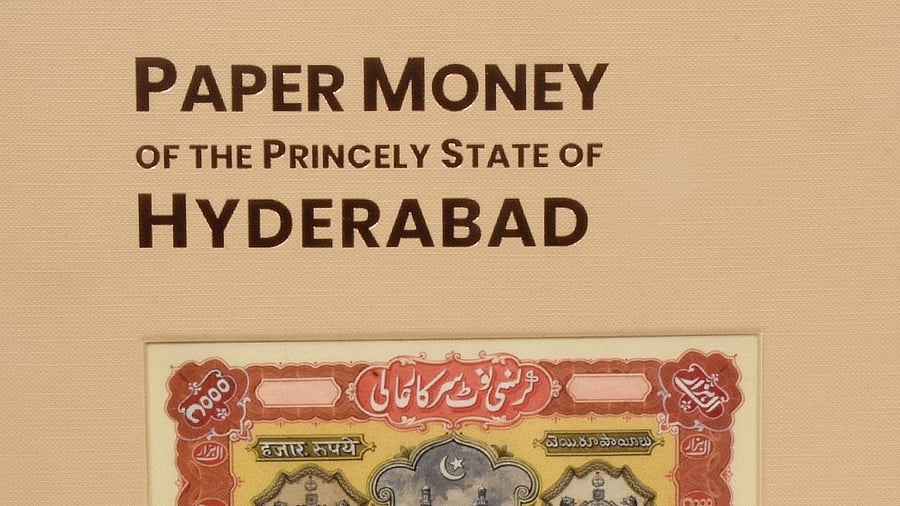
Bengaluru-based numismatist Rezwan Razack’s latest book, ‘Paper Money of the Princely State of Hyderabad’, was launched last Saturday. It traces the story of Hyderabad’s currency from the time of the first Nizam in 1724 to its withdrawal in 1959.
The book is a result of three years of in-depth research and builds on his 25-year study of Indian paper money. With little material available online, he relied on frequent visits to Hyderabad, where he explored archives and interacted with dealers, private collectors, and professionals at auction houses.
The book features over 600 photographs of notes, design patterns, and archival material. It goes beyond simple cataloguing and documents details of design, printing, packaging, circulation, and forgery of notes.
It also recounts the 1920 sinking of the SS Egypt, which was carrying Hyderabad notes printed in England, many of which were later salvaged.
A businessman, Razack notes that Hyderabad was the only princely state allowed by the British to issue paper currency, following a shortage of metal during the First World War.
Comprising 33 chapters, the book also explains “the Osmania Sicca system, in which seven Hyderabad rupees equalled six British Indian rupees”.
Available at Rezwan Razack’s Museum of Indian Paper Money, Brunton Road.