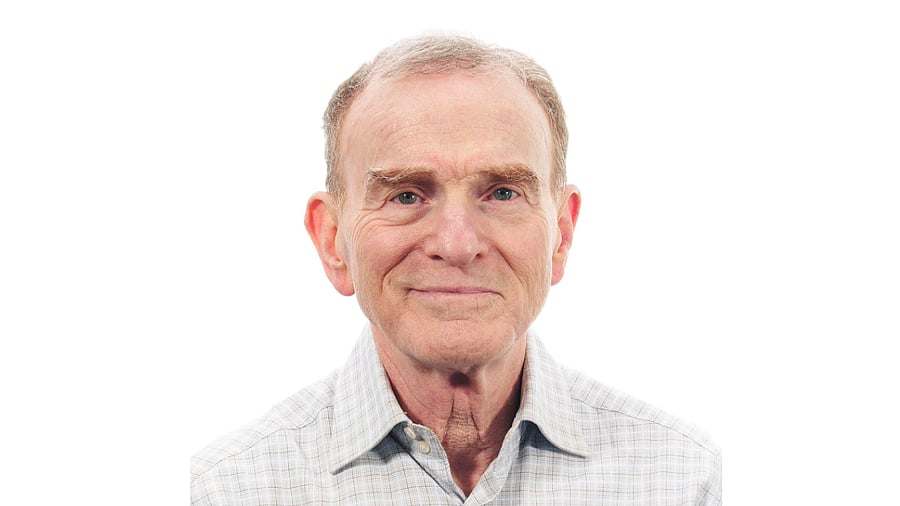
Randy Schekman
Credit: Special Arrangement
Bengaluru: Acclaimed biologist and Nobel laureate (2013) Randy Schekman hailed Bengaluru for heading in the right direction in biological research, and urged more government and philanthropic support in the area.
“Bengaluru has probably the best biological research centre in the country — the National Centre for Biological Sciences (NCBS), which I’ll be visiting on Monday. You need more places like that. You need government and philanthropic support for places like that, where the best young Indian scientists can come and work independently,” he told DH.
He also urged young scientists not to give in to the pressure of getting published in “high-profile journals”.
“This is a concern worldwide. These high-profile journals are controlled by professional editors, who I feel, unfortunately, are in the business of selling magazines. They’re looking for the next shiny object, which is why I’ve decided to publish only in journals run by academics or scientists, where commercial interests aren’t the main concern,” he added. In his speech at the Infosys Prize 2025 felicitation ceremony on Saturday, Professor Schekman traced the arc of modern molecular biology, from the discovery of DNA’s structure to cutting-edge genome editing, while also highlighting the growing global challenge of neurodegenerative diseases, particularly Parkinson’s.
Turning to a more urgent concern, Schekman warned that Parkinson’s disease is rising faster than Alzheimer’s worldwide, likely driven by environmental factors as well as genetics.
Drawing on his personal experience caring for his late wife, who had Parkinson’s, he emphasised the lack of effective therapies. He described his involvement in a large, collaborative global research effort, backed by philanthropist Sergey Brin, aimed at advancing fundamental understanding of the disease through team-based science.
“When I walk away from this programme in five years, I will leave behind, with some confidence, breakthroughs that will make a difference in the lives of those affected by Parkinson’s,” he said, concluding his speech.
Prior to the event, Schekman also interacted with 80 high school and university students, answering questions about science and research.
Precise correction Nobel laureate Randy Schekman pointed to recent breakthroughs in genome editing especially CRISPR-Cas9 technology pioneered by researchers including his colleague Jennifer Doudna. He described how this RNA-guided system allows precise correction of disease-causing mutations citing successful treatments for sickle cell anaemia and a recent case in which a fatal metabolic disorder was cured in an infant. These advances he said signal unprecedented possibilities for treating inherited diseases.