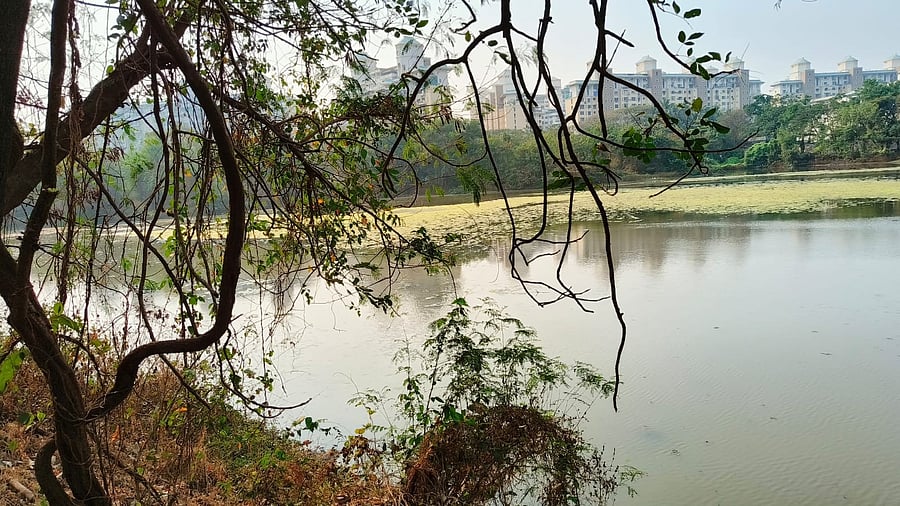
Algae on flamingo lake.
Credit: DH Photo
Navi Mumbai: Environmental groups have raised serious concern over the deteriorating condition of DPS Flamingo Lake at Nerul in the satellite township of Navi Mumbai, a critical satellite wetland linked to the Thane Creek Flamingo Sanctuary (TCFS), as the winter migration season advances without the customary arrival of large flocks of pink birds.
Large stretches of the lake are currently smothered by a dense green carpet of algae, leaving only narrow channels of open water and triggering fears that the wetland may be turning hostile for flamingos and other waterbirds.
NatConnect Foundation has drawn attention to a Ramsar-linked study on flamingo mortality which clearly documents that excessive algal blooms, particularly when dominated by cyanobacteria, can release toxins and trigger mass die-offs, as seen historically in several major flamingo habitats abroad. The study underscores that while flamingos feed on algae, uncontrolled blooms alter food quality and water chemistry in ways that can prove fatal. It also highlights that flamingos are highly sensitive to changes in feeding conditions and water quality, often abandoning otherwise familiar wetlands once ecological thresholds are breached.
NatConnect has made an urgent representation to the Maharashtra Mangrove Cell, seeking immediate removal of excessive algal growth and restoration of the lake to make it suitable for flamingos. “This is no longer a cosmetic issue. The lake is visibly stressed,” said NatConnect director B N Kumar, pointing to stagnant algal mats that reduce dissolved oxygen levels and severely limit feeding grounds.
The situation has worsened in recent weeks, with algae deposits initially seen on the eastern side of the lake shifting to the western side due to tidal inflows and settling there, said Sandeep Sareen of the Navi Mumbai Environment Preservation Society. The persistence of the problem raises serious questions, especially since the Mangrove Cell has continuous monitoring teams at the site, Sareen said.
Sareen said he had earlier noticed mysterious froth forming in parts of the lake and apprehended that there could be attempts to sabotage the wetland. He said he had drawn the attention of concerned officials to the development, but no action followed.
DPS Flamingo Lake was declared a Conservation Reserve following public outcry after the mysterious deaths of several flamingos last year. However, the formal government resolution is still awaited. Conservation status without active, on-ground ecological management risks remaining symbolic rather than effective, Sareen said.
According to NatConnect, a small group of flamingos briefly arrived at TCFS last month, possibly to scout habitat conditions, but sightings have since dropped sharply. Flamingos typically arrive in the Mumbai region by October or November.
Experts attribute the delayed migration partly to prolonged monsoon conditions and sustained water availability in the Rann of Kutch, which may have reduced the urgency for southward movement. However, once birds begin scouting winter habitats, the quality of local wetlands becomes decisive.
Satellite wetlands such as DPS Flamingo Lake function as essential secondary habitats, providing feeding and resting grounds that reduce pressure on the core sanctuary and allow flamingos to spread safely across the landscape. With the migration window still open, immediate cleaning and long-term nutrient control at DPS Flamingo Lake could determine whether the season ends with empty waters or the return of Mumbai’s most iconic pink visitors, Kumar observed.