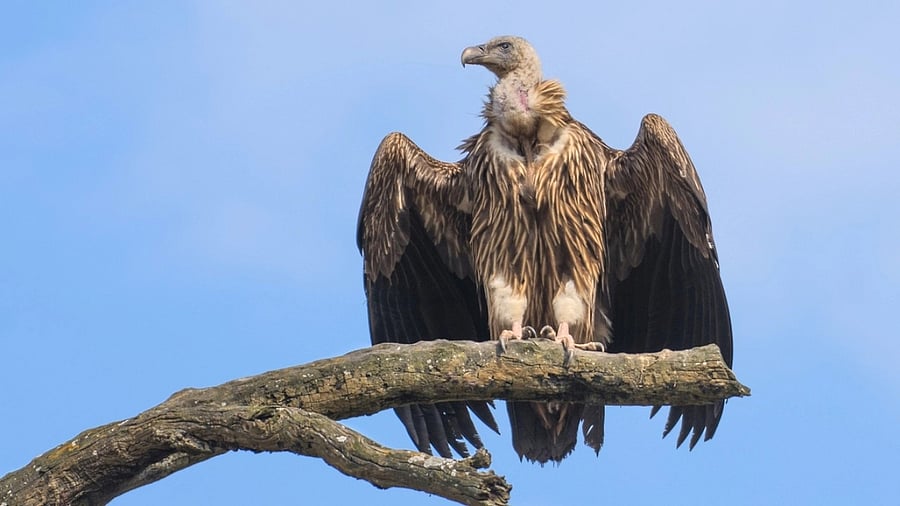
Representative image of a vulture.
Credit: iStock Photo
Mumbai: In an encouraging trend for wildlife protection, gaushalas in Rajasthan are emerging as key contributors to India’s Jatayu (vulture) conservation programme by reviving traditional cattle-care practices and adopting vulture-safe measures.
Most gaushalas in the desert state have stopped using veterinary drugs that are toxic to vultures and have also abandoned the practice of burying dead cattle, ensuring a steady supply of safe food for the scavenging birds.
The Mumbai-headquartered Bombay Natural History Society (BNHS) has confirmed that these measures have not only halted the decline in vulture numbers but have also helped stabilise and gradually increase their population.
“The BNHS has observed that many gaushalas in Rajasthan have stopped using vulture-toxic veterinary drugs such as diclofenac, aceclofenac, ketoprofen and nimesulide, and have shifted to vulture-safe alternatives like meloxicam and tolfenamic acid,” said Kishor Rithe, Director, BNHS. “They have also stopped burying dead cattle, allowing jatayus to feed naturally. As a result, vultures today have ample food availability around these gaushalas.”
Vultures play a crucial role in cleaning the environment and preventing the spread of diseases, but their population in India has witnessed a catastrophic decline over the past decades. One of the primary reasons for this crash has been the veterinary use of Non-Steroidal Anti-Inflammatory Drugs (NSAIDs) in cattle.
When cattle treated with these drugs die and vultures feed on their carcasses, the chemicals cause severe liver and kidney damage, leading to kidney failure, also known as visceral gout. This has been the main factor behind the massive decline in vulture populations.
The BNHS cites the example of Apna Ghar, which runs a gaushala at Lohagarh near Bharatpur, housing over 5,000 cattle. The gaushala follows vulture-friendly practices, including safe drug use and open carcass disposal.
Praising these initiatives, Dr Sujit Narwade, Deputy Director, BNHS, said traditional gaushala practices are strengthening vulture conservation efforts in Rajasthan. “Gaushalas are emerging as unlikely champions of vulture conservation. With large cattle populations in the Thar Desert, many gaushalas are reviving older, less drug-dependent methods of cattle management and ensuring carcasses are disposed of at designated dumping grounds,” he said.
Similar practices have also been observed in neighbouring Madhya Pradesh. Dr A. Samson, a BNHS researcher based in Bhopal, pointed out that Ramkali Gaushala near the Halali Dam follows eco-friendly methods, prefers natural medicines for cattle care and leaves carcasses in the open, thereby providing food for vultures.