
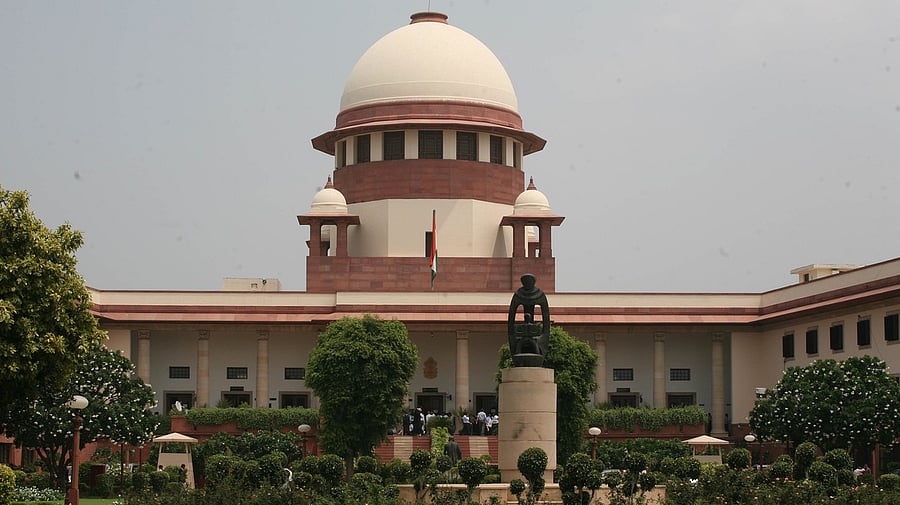
The Supreme Court of India.
Credit: iStock Photo
New Delhi: The Supreme Court on Wednesday set aside the Madras High Court's May 2025 interim order which stayed the operation of 10 University Amendment laws allowing the Tamil Nadu government to appoint Vice Chancellors in state-run varsities.
A bench of Chief Justice of India Surya Kant and Justices Joymalya Bagchi and Vipul M Pancholi questioned the manner in which a vacation bench of the High Court acted in a "tearing hurry" to stay the duly enacted laws.
The court, however, remanded the matter to the High Court for fresh hearing.
It directed that the matter should be heard by a bench led by the HC's Chief Justice or any other appropriate bench.
The court also recorded the state government's consent that no appointments will be made till the decision by the High Court.
The court asked the High Court to decide the matter within six weeks.
The High Court had stayed the operation of the 10 Acts which were deemed to have given assent to the extent, by taking away powers of Governor as the Chancellor of certain State Universities.
For Tamil Nadu, senior advocate Abhishek M Singhvi submitted that the laws had come into force in April 2025 and that, after a month, the writ petition was moved with urgency during the summer vacation.
He contended that the procedure adopted by the HC was fundamentally flawed, as the stay was granted first and arguments were taken up later, whereas settled judicial practice requires that parties be heard on merits before an interim stay of legislation is granted. He emphasized the strong presumption of constitutionality that attaches to legislative enactments.
Senior advocate P Wilson, also appearing for the State, vehemently argued that the writ petition had been filed by bypassing the Madurai Bench of the Madras HC, despite the petitioner falling within its territorial jurisdiction.
He also pointed out, the orders were passed despite the State not having been afforded sufficient opportunity to file counter-affidavits or effectively present its case.
By setting aside the High Court's order, the top court said that, at the very least, the State ought to have been given an adequate and effective opportunity of hearing before the interim stay of the enactments was granted.