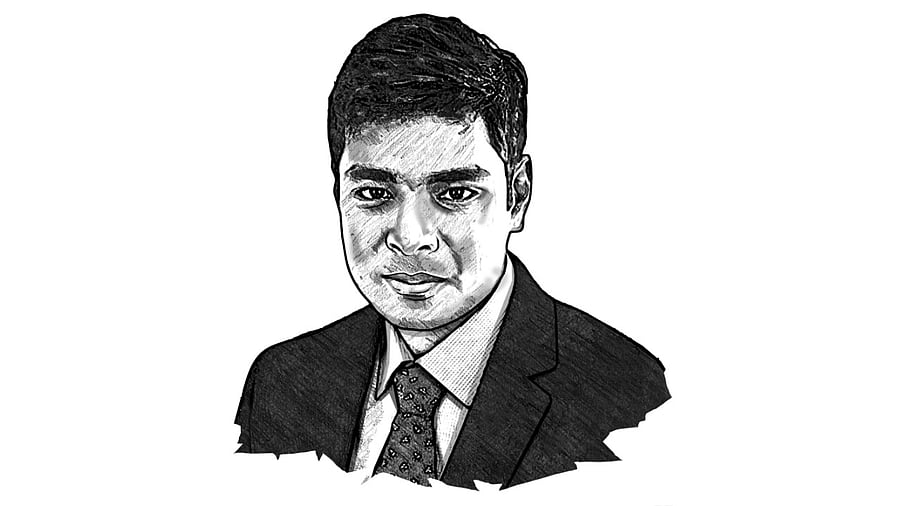
Mohamed Zeeshan is a student of all things global and, self-confessedly, master of none, notwithstanding his Columbia Master’s, a stint with the UN and with monarchs in the Middle East
It has been quite a decade so far. The 2020s opened with the assassination of a major Iranian military officer. Many expected that event to lead to a region-wide war, disrupt global oil flows, and shape the coming decade. They couldn’t have been more wrong.
Days after Qassem Soleimani was killed by an American drone strike in Iraq, he quickly became a footnote. A once-in-a-century pandemic overturned the world for the better part of three years. Then came the invasion of Ukraine, which sparked the largest war in Europe since World War II. And then, the Hamas attack on Israel led to chaos and violence in Gaza, Lebanon, Syria, and even on college campuses in the United States.
Heading into 2025, the world was bracing for the return of Donald Trump as US president. Trump had been reelected on the back of widespread economic frustration in the US, and he immediately pledged to relaunch the trade nationalism that had dominated his first term. Only weeks into his term, Trump made good on that promise – imposing a baseline tariff rate on every country in the world and tacking on additional surcharges on a few.
Sudden and rapid changes in trade policy remain a cornerstone of US foreign policy. Trump sees tariffs as a tool of leverage, amping them up and dialling them down based on how Washington’s negotiations and relations with each of those countries go.
Tariffs are now so central to Washington’s worldview that they can be taken as a relatively reliable indicator of the health of bilateral relations. China, for instance, has travelled from as high as 145 per cent in April to 10 per cent. That journey culminated in a relatively sanguine meeting between Trump and Chinese President Xi Jinping in November. India, on the other hand, remains subject to 50 per cent – among the highest rates for any US partner today. Yet, all of these rates could change quite quickly if Trump’s relations with the leaders of those countries improve or sour. That means no US trade partner can count on stability heading into the new year.
Ordinarily, such volatility would send the global economy into a tizzy. The reason that did not happen was because of the other great disruptor of 2025: artificial intelligence. Three years after the initial launch of ChatGPT, AI has taken an iron hold on the fortunes of the global economy. This year, AI mania drove US stock markets to unprecedented highs. Almost 40 per cent of those indices are now dominated by a handful of AI-related stocks. Many of those companies have pledged to invest trillions of dollars over the next few years, and global capital flows have followed them.
But there are costs. Many economists believe that the US stands on the precipice of yet another bubble, reminiscent of the dot-com bust at the turn of the century and the real estate collapse that came with the 2008 global recession.
These fears might be hypothetical and imagined. What is far more real is the fact that AI has already hollowed out parts of the global labour market. This year, companies such as Amazon and Microsoft cut over 50,000 jobs because of the adoption of AI. One report says that global banks could cut as many as 200,000 jobs in the next 3 to 5 years.
The irresistible rise of AI also poses other risks. AI can be used to build advanced weapons, pull off cyber crimes, and spread disinformation capable of destabilising entire countries. Think of AI not as a type of software but as a sophisticated weapon, akin to nuclear technology. If AI technology ends up in the wrong hands, everyone from rogue regimes to criminal syndicates may use it to amplify their actions and hasten their goals.
So far, in sharp contrast to his otherwise interventionist approach to trade and global business, Trump has handled these challenges in a relatively laissez-faire manner. This month, Trump cleared the sale of advanced AI chips to China, after they had been banned by former President Joe Biden on national security grounds. Shortly thereafter, he signed an executive order limiting the ability of US states to regulate AI.
The logic behind these deregulatory moves is simple. In a world seemingly dominated by AI, the US hopes to become an early-mover, capturing the global market by exporting its chips to the world, and hitching the economy to the AI wave for as long as it lasts. In 2025, AI established its roots. In 2026, the world will look to catch up.
(The writer is a student of all things global and, self-confessedly, master of none, notwithstanding his Columbia Master’s, a stint with the UN and with monarchs in the Middle East.)
(Disclaimer: The views expressed above are the author's own. They do not necessarily reflect the views of DH.)