
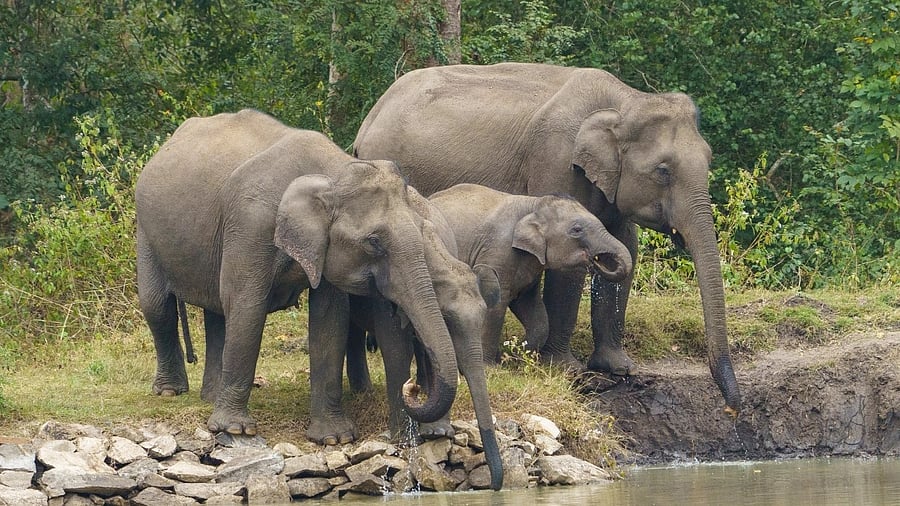
Elephants at Nagarahole Tiger Reserve.
Credit: Special Arrangement
The death of eight wild elephants, knocked down by a speeding train in Assam, should prompt a rethinking of the existing safeguards. A large herd of elephants – about a 100, according to reports – was trying to cross the tracks when the Rajdhani Express mowed them down.
It happened on a stretch of forest demarcated as elephant habitat and close to an elephant corridor. Though the train was brought to a halt after the herd was sighted, it hit the elephants.
It is being argued that greater caution during the harvest season, which sees an increase in elephant movement in the region, could have averted the mishap. The accident happened early in the morning when the fog had reduced visibility.
Animals, including elephants, are often killed in accidents on railway tracks and roads. The rise in the number of these incidents needs to be seen in the context of expanding human activity and conflicts with the wild.
Natural habitats of the animals are shrinking, leading to fragmented movement and a marked change in traditional migratory routes. More roads and tracks are being laid and the change in weather patterns is leaving an impact.
While all this is true, the responsibility to ensure these human-driven shifts do not make the animals’ lives unsafe rests with the governments and society. Humans have an emotional bond with elephants as they are revered in religion, literature, and across cultures. The animals have lived in human environments for hundreds of years, tamed and domesticated. When they die in their habitats to accommodate human convenience or due to human oversight, it must serve as a distress call.
The incident in Assam is particularly disturbing and should be investigated for lapses that may have caused it. All incidents involving trains and the disruption of the wild should be probed to ensure efficient corrective mechanisms. Effective protocols should be activated to deal with situations that may lead to accidents.
Hundreds of miles of railway tracks run through forests in India – the country requires a system that collates real-time information about the presence of elephants and other wild animals on and around the tracks, and ensures prompt follow-through action.
Community participation can be key; people living in nearby areas can be involved in mitigation efforts led by government agencies and departments. The Railways have announced plans to use AI to supplement the monitoring measures. This is a welcome initiative that can help realise the larger vision of coexistence.