
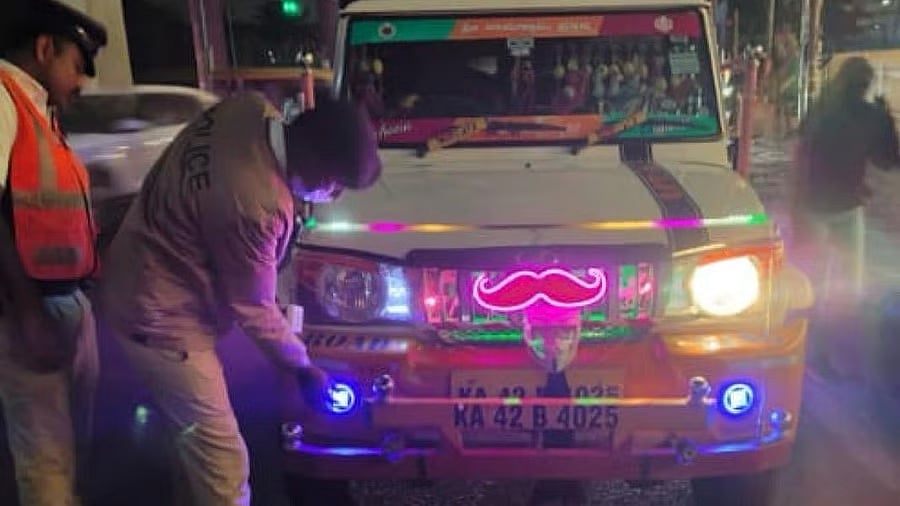
Traffic policemen make a violator remove unauthorised light fittings from his vehicle.
Credit: BTP
The Bengaluru Traffic Police’s ongoing crackdown on illegal lights is a welcome step towards reclaiming basic road discipline. Booking over 1,000 motorists for using unauthorised LED bars, high-intensity headlights, and red-and-blue strobe lights signals an overdue intent to treat public roads as shared civic spaces, rather than arenas of intimidation. The legal position is unambiguous. The Indian Motor Vehicles Act and the Central Motor Vehicles Rules prohibit private vehicles from using multi-coloured lights, red or blue flashers, and high-intensity lamps. Rules 106 and 108 require headlights to be properly deflected and reserve emergency-style lighting exclusively for authorised services such as ambulances, fire engines, and police vehicles on duty. Violations attract penalties, prosecution, and immediate removal of the illegal fittings.
More troubling is the systemic harm caused by such misuse. Blinding lights destabilise traffic flow, induce panic braking and momentary loss of vision, increasing the risk of collisions. But the gravest consequence is the ‘cry wolf’ effect: when strobe lights become commonplace on private cars, two-wheelers, and commercial vehicles alike, motorists stop responding instinctively, delaying passage for genuine emergency vehicles where every second can mean the difference between life and death. The persistence of this practice stems from a toxic culture of power signalling – what sociologists describe as a "Raj Mentality”, mimicking the colonial era where British rulers enjoyed physical and legal separation from their subjects. Strobe lights have become portable badges of importance, deployed to bully, bypass queues, and assert dominance on the road. The Supreme Court has rightly noted how the illegal use of these lights dilutes the authority of responders during genuine crises. This culture of VIP racism and road apartheid is reinforced when elected representatives, including MPs, MLAs, and even former corporators, openly use such lights without consequence. Selective enforcement against ordinary motorists while politically connected violators go untouched only deepens public cynicism. If the law is to command respect, it must apply upward as rigorously as it does downward.
The problem extends far beyond Bengaluru, reflecting a nationwide failure to dismantle visible privilege on public roads. The Centre must issue a clarification on who can use such lights, and Directors General of Police across states must enforce it without exemptions. By cracking down on illegal lights, the Bengaluru police, particularly the West division, have struck at a deeper ethos of entitlement. Ending illegal lights is not about aesthetics or legal compliance; it is about equality before the law. Switching off these lights is a necessary step towards switching off a dangerous mindset.