
SIR.
Credit: X/@TNelectionsCEO
The Prime Minister is the head of government and the chief political executive of the country. Every Prime Minister practises politics because he or she wins and holds office through a process based on political contestation. But there are limits to that politics, set by the responsibilities that go with the office of the head of government, which by definition in a democracy, is a government of all people. Narendra Modi has been among India’s most political prime ministers, and he has changed the country’s politics more than, perhaps, all his predecessors. Many of his statements, especially during election campaigns, have not reflected the responsibilities of his office, but the political imperatives of his party. The statements he made in the last few days in West Bengal and Assam, where Assembly elections are due, are politically divisive and do not befit the office he holds.
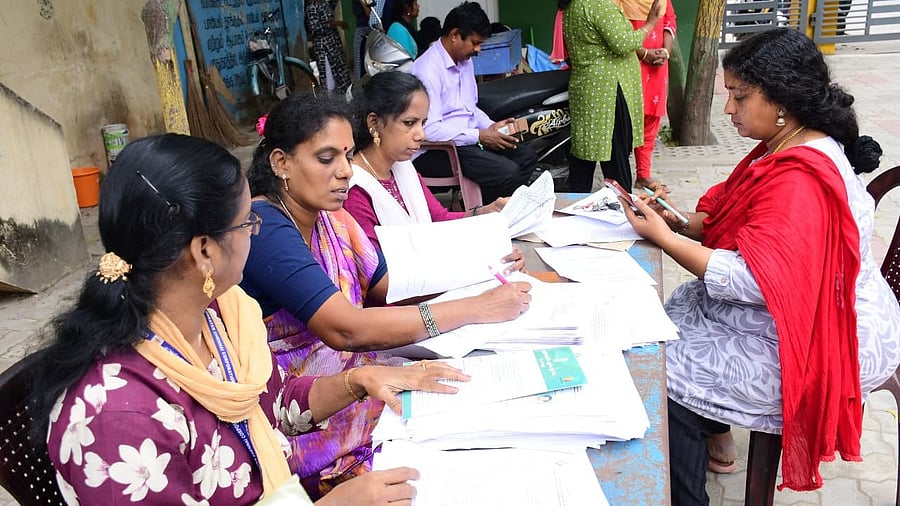
In West Bengal, he launched a blistering attack on the ruling Trinamool Congress with the claim that illegal migration was being perpetuated by the “patronage and syndicate” of that party and its government. He said a BJP government, if it assumes office in the state, would take “big action” to crack down on the infiltrators and stop “illegal migration”. The Prime Minister also blamed the Congress party for the infiltration of Bangladeshis in Assam. This blame is misplaced, considering that it is the central government’s responsibility to protect the nation’s borders and prevent infiltration. State governments have no role in it and are not equipped for the task. The border with Bangladesh is manned by the Border Security Force (BSF) under the Union Home Ministry. If there is infiltration, the BSF and the central government are answerable for that lapse, not the state government. It must be noted that the alleged presence of infiltrators in the country’s voters’ lists is a major political issue raised by the BJP and its leaders. But the Special Intensive Revision (SIR) of electoral rolls conducted by the Election Commission of India (ECI) has not yet established this infiltration of the rolls.
The Prime Minister said differences are emerging in language because of infiltration. He also made references to “changes” in demography. These are expressions with connotations that may go beyond the context of infiltration. The Prime Minister has made such remarks in the past as well. Their implications are not limited to infiltration from across a national border; their fallout may be more immediate and internal, in the marking of new boundaries among the citizens of the country.