
K NANJARAJE URS
In much of Europe and in countries such as Australia, holding a public Medicare card comes with a quiet but powerful assurance. Besides free treatment, the health ministry individually contacts residents to undertake age-specific cancer screening, like pap smears for women over 25 or stool tests for people over 50. Follow-up consultations and treatments, if any, are free. These reminders arrive every year; no applications, proof of poverty, or personal appeals are required. The State assumes responsibility for prevention, not just cure.
Similarly, an unemployed person searching for work can apply for subsistence allowances online, often without any face-to-face interaction with government offices. Income support is deposited directly into bank accounts while public employment services assist with job matching, training, and reskilling. The presumption is not suspicion but support.
These lived realities contradict the dominant narrative that the Global North promotes globally, one of
free markets, minimal states, and individual responsibility. In practice, markets are embedded within strong public institutions that absorb risk, redistribute resources, and protect citizens across the life course. These are not exceptional welfare measures; they are routine features of everyday life in the Global North.
Compare this with the shallowness of the current Indian debate on so-called “freebies”. In India, social spending is often seen as fiscally irresponsible populism rather than as an essential function of the modern state. The term “freebie” itself reflects the absence of an institutionalised understanding of social security. In the Global North, the ‘cradle-to-coffin’ social security is not dismissed as giveaways. They are treated as investments in human capability, productivity, and social stability. What appears as discretionary largesse in the Global South is, in fact, routine governance in functioning democracies. This framing is striking given that the Indian diaspora in the Global North openly accesses these systems, from healthcare and unemployment benefits to child support and pensions, while often criticising similar measures in India.
This person-versus-person framing obscures the reality that universal public services are designed as social security for all across the life cycle. Even middle-class citizens who temporarily fall into vulnerability through illness or unemployment receive timely and targeted support until they recover. In much of the Global South, however, illness, unemployment, disability, and old age continue to be treated as personal misfortunes. Karma rather than shared societal risks.
This difference matters. When social support is delivered through ad-hoc schemes rather than rights-based institutions, it becomes politically contestable and morally suspect. The problem is not that India provides too much social support, but that it provides it in fragmented, poorly institutionalised ways that invite the language of charity rather than citizenship. The “freebies” debate is, therefore, not about excess welfare, but about the absence of a coherent social security architecture.
Culturally, social protection is so deeply entrenched in the Global North, not even pro-privatisation leaders like Margaret Thatcher were able to dismantle the National Health Service. Any attempt to undermine the NHS has historically triggered fierce public resistance. Similar patterns are evident across Europe, Canada, and Australia, where comprehensive social security enjoys broad cross-party consensus. Social security is not viewed as charity; it is treated almost as a civic faith, integral to national identity and democratic legitimacy. Importantly, independent media continuously monitors these systems, publicly exposing failures in hospital waiting times, welfare delays, or gaps in aged care. Accountability flows from the State to the citizen, not the other way around.
A systemic imbalance
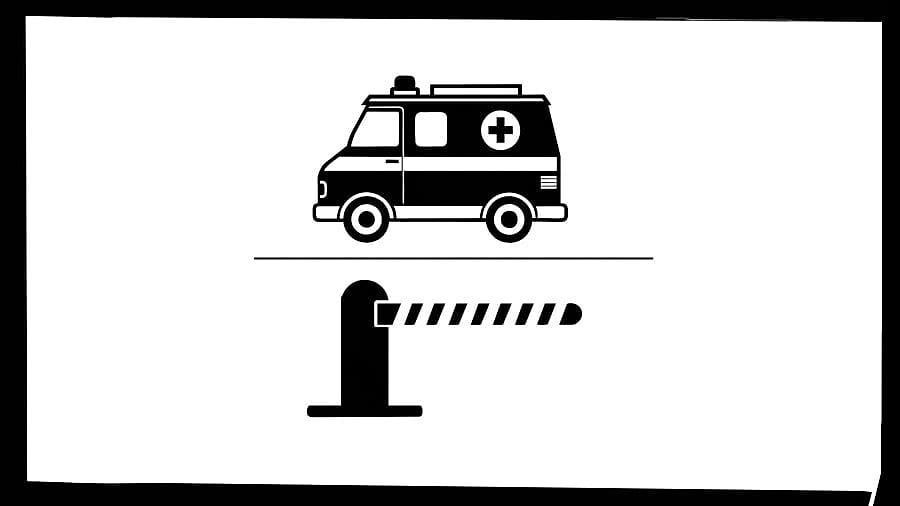
The visibility of the State reflects this orientation. In the Global North, the most visible public institutions are ambulances, maintenance crews, nurses, social workers, and emergency services. These institutions signal that the primary role of the elected State is to facilitate well-being and manage collective risk. The State is the “third parent,” sharing the responsibility for a person’s upbringing and protection alongside families and communities.
In much of the Global South, the contrast is stark. The most visible face of the State is often the police or enforcement machinery. Public institutions are experienced less as service providers and more as instruments of control. Welfare systems, where they exist, are narrow, underfunded, and procedurally hostile. Citizens are required to prove need repeatedly, while the State is rarely held accountable for systemic failure. Social security is treated as charity, not a right.
This imbalance is reinforced by international financial institutions such as the IMF and the World Bank, which have long promoted privatisation, austerity, and “small government” reforms across the Global South. Essential services such as healthcare, education, water, electricity, and transport are recast as market commodities. Yet the same ideology is conspicuously absent in the Global North, where public institutions remain robust, publicly funded, and politically protected.
The experience of the Global North demonstrates a simple but powerful truth: strong public institutions and social security are not barriers to prosperity. They are its foundation. The question is not whether states can afford social security, but whether they can afford the continued human cost of its absence. Reclaiming this vision in the Global South is not ideological excess; it is the unfinished project of modern democracy itself.
(The writer holds a PhD in Public Policy from NLSIU and is a social
scientist based in Australia, specialising in improving governance solutions for social and environmental challenges)
Disclaimer: The views expressed above are the author's own. They do not necessarily reflect the views of DH.