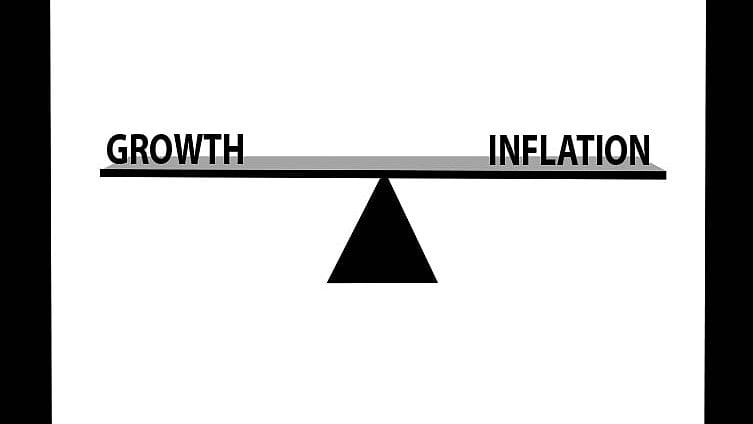
The Reserve Bank of India (RBI) cut the repo rate by 25 basis points, lowering it from 5.5% to 5.25%. After earlier signalling limited room for further easing, the rate cut appeared surprising. A gross domestic product (GDP) real growth of 8.2% and an average headline inflation rate of 1.7% for Q2 of FY25-26, lower than its target of 4%, may make the central bank’s move appear counterintuitive. Nevertheless, the RBI’s decision to cut the rate was an implicit recognition of the limits of interest rate-focused monetary policy within India’s economic structure,
and an informed move to maintain growth momentum.
Since adopting inflation targeting in 2016, monetary policy decisions have become more forward-looking. With the RBI committed to keeping inflation near 4%, interest rate moves must reflect expectations about where inflation is likely to go, rather than where it stands today. Although inflation targeting focuses on consumer prices, Consumer Price Index (CPI) inflation in India remains influenced by food prices. These movements are critical for household and welfare at large, but can obscure demand pressures and the broader inflation outlook. Food inflation is often driven by supply shocks, such as weather events, global commodity prices, and distribution bottlenecks, making it less responsive to monetary policy tightening. The current lower inflation is primarily due to a favourable base and kharif outlook, with food-price corrections also aided by government price-stabilisation actions, including imports and buffer stocks, rather than an interest-rate-focused monetary policy. Hence, low headline inflation does not, by itself, offer a reliable guide to future inflation trends.
This is why underlying demand conditions are a critical guide for monetary policy. It may be plausible to argue that current real robust growth should lead to a straightforward rate hike, given expected inflationary pressures. This kind of stance is possible only when the underlying demand is genuinely strong and likely to push inflation up over the policy horizon. However, the reality and complexity of the economy are different. Inflation typically responds to changes in consumption and investment with a lag, making growth indicators a crucial reference point for anticipating future inflationary pressures. But when transmission frictions exist, headline growth numbers alone can be a poor guide to the strength of demand.
The current real growth, although partly boosted by a low GDP deflator, suggests that overall growth remains upbeat, even as underlying demand and pricing power appear weaker. India still has potential for growth, scope for supply expansion, a large informal sector, and relatively weak pricing power for the majority of economic agents. Sustaining growth may
require supportive financial conditions, fewer frictions, and better formalisation. In the absence of such conditions, a rate hike could have adverse effects, especially for credit-constrained borrowers.
A significant portion of economic activity occurs in the informal sector, where price signals and credit conditions are often difficult to observe. The growth in this sector may respond slowly to a rate cut, but the adverse effect of a rate hike would be more pronounced. The efforts to formalise the economy through the Goods and Services Tax (GST) architecture, Udyam registration, and digital payment structure, as well as gig registration, may gradually strengthen monetary policy transmission.
Between policy and impact
India’s bank-dominated credit system means that changes in policy rates affect demand only if banks are willing and able to reprice loans. When lending standards tighten or banks adjust deposit rates slowly, reductions in rates may not be translated into proportionately lower borrowing costs for firms. In our research, we demonstrate that monetary transmission can sometimes be blunted by credit market segmentation. We find that the impact of the interest rate is asymmetric in India. While large firms are less responsive to rate hikes, micro, small, and medium-sized enterprises (MSMEs) and households face credit constraints due to an effective lending-rate floor.
The last interest rate cut is consistent with our evidence. Equity markets and short-term debt traders were quick to respond to the RBI’s previous rate cut, but it did not translate into uniform repricing across segments. The cautious lending behaviour, shaped by concerns over asset quality, capital constraints, and risk pricing, may have kept credit conditions tighter than policy signals alone would suggest. This can create a gap between the intended policy stance and the actual financial conditions faced by firms and households.
As a result, subdued credit growth may reflect impaired transmission rather than weak underlying demand, complicating the interpretation of credit and investment indicators. The recent NITI Aayog report, ‘Deepening the Corporate Bond Market in India,’ emphasises the need to deepen the corporate bond market to enhance monetary policy transmission. These structural challenges also influence how the RBI communicates its policy stance. The central bank chose a cautious and conditional language, but it affects the effectiveness of policy signals. In an economy with segmented credit markets and uneven monetary transmission, the RBI often needs to explain not only the direction of policy but also the channels by which policy is expected to operate.
The RBI’s recent rate cut may be appropriate, given subdued inflation and India’s potential for growth. But it also highlights a deeper challenge for monetary policy. India’s inflation-targeting framework can be constrained by its often implicit commitment to a neoclassical stance rather than pragmatic reality. The December decision suggests the RBI responded to these constraints, recognising that the policy rate alone cannot shoulder the burden of stabilisation in an economy where supply shocks and segmented transmission matter.
The decision reflects adaptation to valid critiques about complexity and real-world frictions rather than mechanically following neoclassical prescriptions. Monetary policy must align its actions with the economy’s institutional and structural realities, thereby supporting growth.
(Gourishankar teaches finance, and Neha is a doctoral scholar in finance, at IIT Kharagpur)
Disclaimer: The views expressed above are the author's own. They do not necessarily reflect the views of DH.