
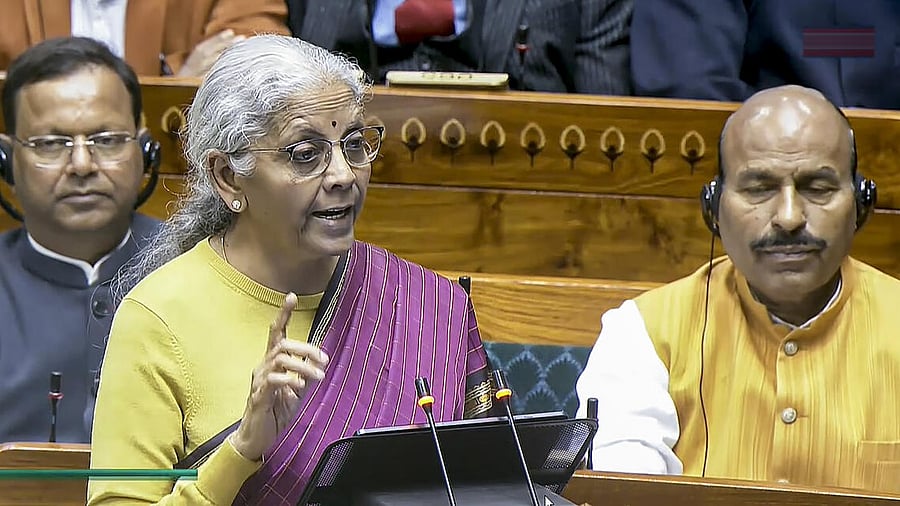
Finance Minister Nirmala Sitharaman presents the 'Union Budget 2026-27'
Credit: PTI photo
Union Finance Minister Nirmala Sitharaman presented her 9th consecutive Budget in the Lok Sabha on Sunday and announced a slew of proposals for poll-bound States like Kerala, Tamil Nadu, West Bengal and Assam.
With voting scheduled to take place sometime in April, these States were propelled into the limelight and became a special focus during the budget presentation.
Kerala and Tamil Nadu: Rare earth corridors, hiking trails
Sitharaman said the government plans to support mineral-rich States like Odisha, Kerala, Andhra Pradesh, and Tamil Nadu by establishing rare earth corridors.
These corridors will focus on the mining, processing, research, and manufacturing of rare earth minerals, she said. The move follows the launch of the Rare Earth Permanent Magnets Scheme in November 2025 and aims to strengthen India’s capabilities in this critical sector.
The government also plans to establish secure and sustainable trekking and hiking trails across North India. Moreover, they also want to create Turtle Trails along key nesting sites in Odisha, Karnataka and Kerala as well as bird watching trails along the Pulikat lake in Andhra Pradesh and Tamil Nadu.
Tamil Nadu, West Bengal: Connecting cities
Sitharaman said the government plans to develop high-speed rail corridors between cities as ‘growth connectors’, linking Mumbai-Pune, Pune-Hyderabad, Hyderabad-Bengaluru, Hyderabad-Chennai, Chennai-Bengaluru, Delhi-Varanasi and Varanasi-Siliguri.
She also proposed the development of an integrated East Coast Industrial Corridor with a 'well-connected' node at Durgapur. They will also create five tourist destinations in the northeastern States.
Assam: Development of Buddhist Circuits
The government also proposed to launch a scheme for development of Buddhist Circuits in Arunachal Pradesh, Sikkim, Assam, Manipur, Mizoram and Tripura.
Sitharaman said the government's "kartavya" is to accelerate and sustain economic growth, fulfil aspirations of people and emphasised that the "Sankalp" is to focus on poor, underprivileged and disadvantaged.