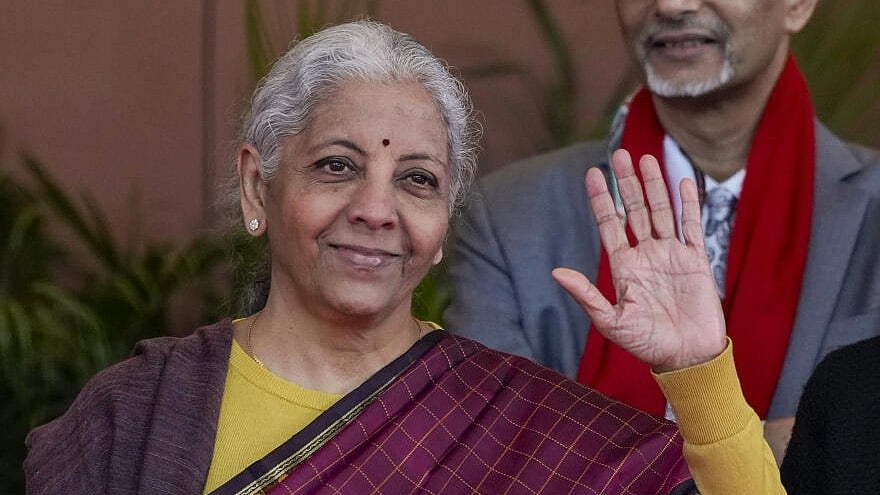
Finance Minister Nirmala Sitharaman
Credit: PTI photo
To disincentivise misuse of tax arbitrage, promoters now need to pay an additional buyback tax.
"This will make the effective tax 22 per cent for corporate promoters. For non-corporate promoters, the effective tax will be 30 per cent," Finance Minister Nirmala Sitharaman said during her Budget speech.
Changes in taxation of buyback were brought in to address the improper use of the buyback route by promoters. Experts believe that treating buybacks as capital gains for non-promoters is positive for investors.
Raj Ramachandran, Partner, JSA Advocates & Solicitors, said, “The budget 2026 has proposed to tax buy-backs for all types of shareholders in the same manner as capital gains. Buy-backs are a preferred method of profit distribution to shareholders, including investors, and clarity on this aspect is certainly welcome. Investment transactions typically include buy-back as one of the options for exit. Various operating companies that have profits for distribution will certainly adopt this path, given the clarity."
Also, the FM proposed to raise the STT ( Securities Transaction Tax) on Futures to 0.05% from the present 0.02 per cent. "STT on options premium and exercise of options are both proposed to be raised to 0.15 per cent from the present rate of 0.1 per cent and 0.125 per cent, respectively," she said.
Experts said this steep increase in STT coming on top of last year's hike will raise impact costs for traders, hedgers and arbitrageurs. “This could cool derivative activity and lead to a reduction in volumes. The intent appears to be volume moderation rather than revenue maximisation, as any potential revenue gain could be offset by lower derivative volumes," Shripal Shah, MD & CEO, Kotak Securities, said.
With an aim to encourage companies to shift to the new regime from the old regime, set-off of brought forward MAT credit is now proposed to be allowed to companies only in the new regime. "Set-off using available MAT ( Minimum Alternate Tax) credit is proposed to be allowed to an extent of 1/4th of the tax liability in the new regime," the finance minister said.
She added that MAT is proposed to be made a final tax, and there will be no further credit accumulation from April 1, 2026. "In line with this change, the rate of final tax is being reduced to 14 per cent from the current MAT rate of 15 per cent," she said.