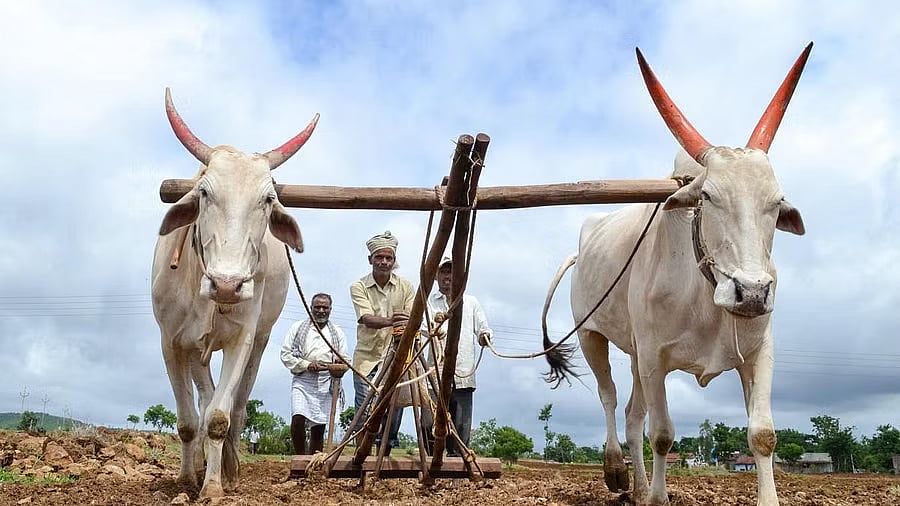
Farmer with ox
Credit: iStock Photo
New Delhi: India and the United States have struck a trade deal to cut US tariffs on Indian goods to 18 per cent from 50 per cent in exchange for New Delhi halting purchases of Russian oil and lowering trade barriers.
Both sides have shared the broad outlines of the deal but not the details, with early indications suggesting India will grant the US only limited access to its agricultural market.
Will India lower tariffs on US corn, soybeans or soymeal?
India, which bans genetically modified (GM) food crops, is unlikely to lower tariffs on imported farm goods such as corn, soybeans and soymeal as it seeks to protect millions of small farmers who eke out a living on meagre incomes.
The United States primarily produces GM corn and soybeans, limiting the scope for market access in India.
Unlike China, which buys millions of tons of corn and soybeans from the United States, India's import requirements for both crops are relatively small.
India is holding large stockpiles of corn and soymeal, an animal feed derived from crushing soybeans for soyoil.
While India is the world's largest importer of soyoil, sourcing supplies mainly from Brazil, Argentina and the United States, its overseas purchases of soybeans remain negligible, including from Africa where non-genetically modified oilseeds are produced.
India also has ample supplies of domestically produced ethanol, made from corn, rice and sugarcane, making it unlikely to concede to requests for imports of either ethanol or corn as feedstock for ethanol production.
While the US has pushed for greater access to India's dairy market, long protected by high import duties and non-tariff barriers, New Delhi is likely to keep the sector off the table given its importance to farmer livelihoods.
The average herd size in India is only two to three animals per farmer, compared to hundreds in the United States - a difference that puts small Indian farmers at a disadvantage, Indian officials have argued.
Where else could India cede ground in agriculture?
India could agree to lowering tariffs or allowing expanded import quotas on farm products such as almonds, walnuts, pistachios, apples, pears and berries. New Delhi could also lower trade barriers for fruits and vegetables, wine and spirits - the areas that do not tend to hurt Indian farmers.
Since India is already import-dependent for almonds, walnuts, pistachios, apples, pears and berries, it would be easier for Prime Minister Narendra Modi's Bharatiya Janata Party to sell any lowering of import barriers on these premium farm products to voters and other political constituencies.
Similarly, President Donald Trump's administration can tout access to Indian markets as a major win for American farmers.
Why agriculture remains sensitive issue for India
Although the farm sector contributes a relatively modest 15 per cent to India's almost 4 trillion dollars economy, it sustains nearly half the country's 1.4 billion people.
Nearly 80 per cent of Indian farmers are smallholders, owning two hectares of land or less, which limits their income. But farmers form an influential voting bloc, and successive governments have sought to avoid angering millions of growers.
The Samyukt Kisan Morcha, an umbrella group of farmers' organisations, and its top leaders including Rakesh Tikait have already taken Modi's government to task over its trade deal with Washington.