
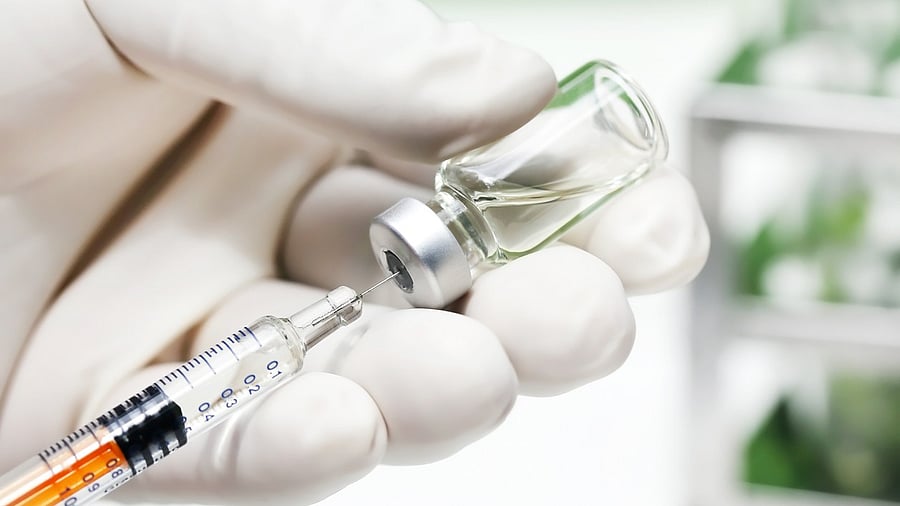
A representational photo
Credit: iStock photo
Union Finance Minister Nirmala Sitharaman in her Budget speech on Sunday said basic customs duty would be removed on 17 high-cost cancer drugs, making critical medicines more affordable for patients.
"To provide relief to patients, particularly those suffering from cancer, I propose to exempt basic customs duty on 17 drugs or medicines," she said while presenting the Union Budget for 2026-27.
The duty on these items has been reduced from the previous rates of 5% or 10% to nil.
The government has proposed to extend support for patients suffering from rare diseases. The Finance Minister said that seven more rare diseases would be added to the list eligible for customs duty exemption on the personal import of drugs, medicines and special medical food.
"I also propose to add seven more rare diseases for the purposes of exempting import duties on personal imports of drugs, medicines and Food for Special Medical Purposes used in their treatment," she added. These imports, when intended for personal use for these specific conditions, now attract nil basic customs duty.
With many patients relying on expensive imported therapies, the exemption aims to ease the financial burden on families of patients and improve access to essential treatment.
Currently, 63 rare diseases are included under National Policy for Rare Diseases.
10 new allied health disciplines
In a move aimed at strengthening the healthcare workforce, the Finance Minister announced the creation of 10 new allied health disciplines, with a plan to train one lakh Allied Health Professionals over the next five years.
The Finance Minister also proposed support for domestic biopharmaceutical manufacturing in the Budget speech.
The government announced the launch of 'Strategy for Healthcare Advancement through Knowledge, Technology and Innovation' (Biopharma SHAKTI) with an outlay of ₹10,000 crore over five years. This initiative aims to reduce critical import dependencies by building a domestic ecosystem for the production of biologics and biosimilars, which are essential for treating diseases such as diabetes, cancer and autoimmune disorders.
"The strategy will include a biopharma-focused network with three new National Institutes of Pharmaceutical Education and Research (NIPER) and upgrading seven existing ones. It will also create a network of over 1,000 accredited India Clinical Trials sites. We propose to strengthen the Central Drugs Standard Control Organisation to meet global standards and approval timeframes through a dedicated scientific review cadre and specialists," Sitharaman said.
Exemptions to be phased out
At the same time, the Budget proposes to phase out certain long-standing exemptions as part of a broader tariff simplification.
The exemption for artificial plasma is set to lapse on February 2. The exemption for Maltol, which is used in the manufacture of the drug deferiprone, is scheduled to lapse on April 1, 2026. and exemptions for X-ray tubes and flat panel detectors used in the manufacture of medical or surgical X-ray machines are also set to lapse on April 1.